Pricing, cut sheets, freezer storage, and planning your bulk beef purchase.
39 articles
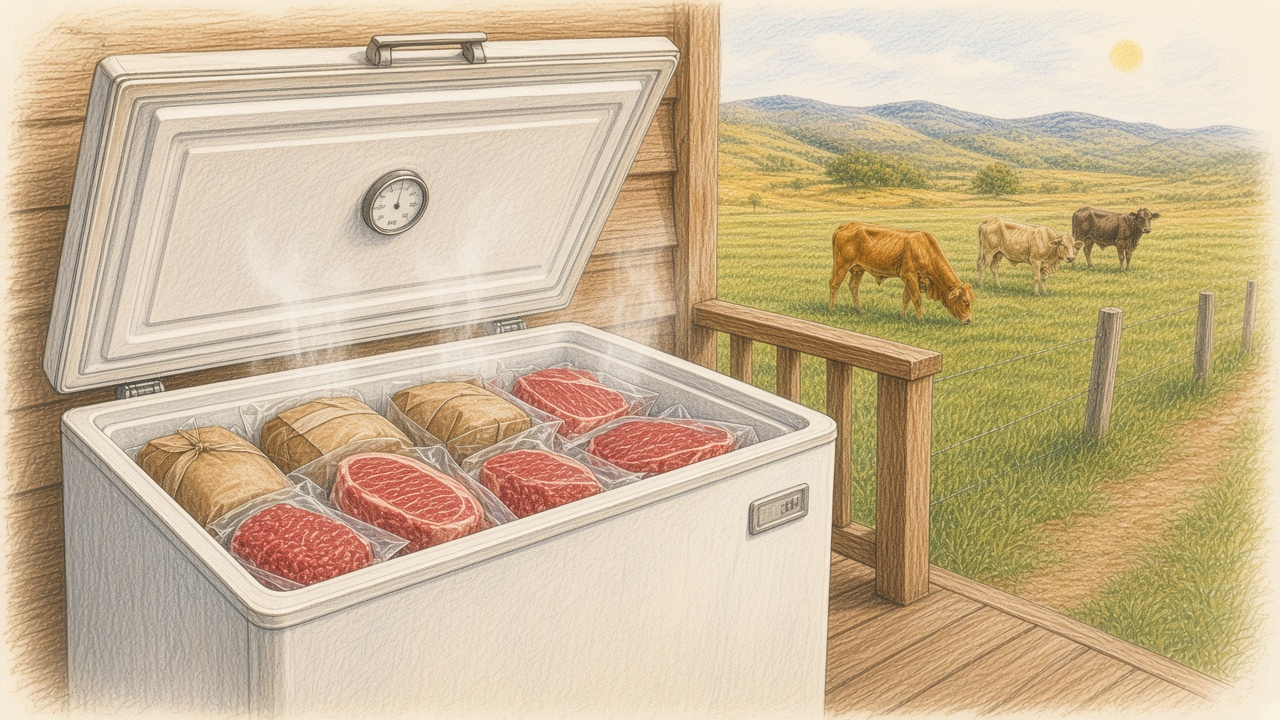
0°F (-18°C) or colder. USDA says food stays safe indefinitely at a steady 0°F. Dial settings, a cheap thermometer, garage units, and power-outage rules.
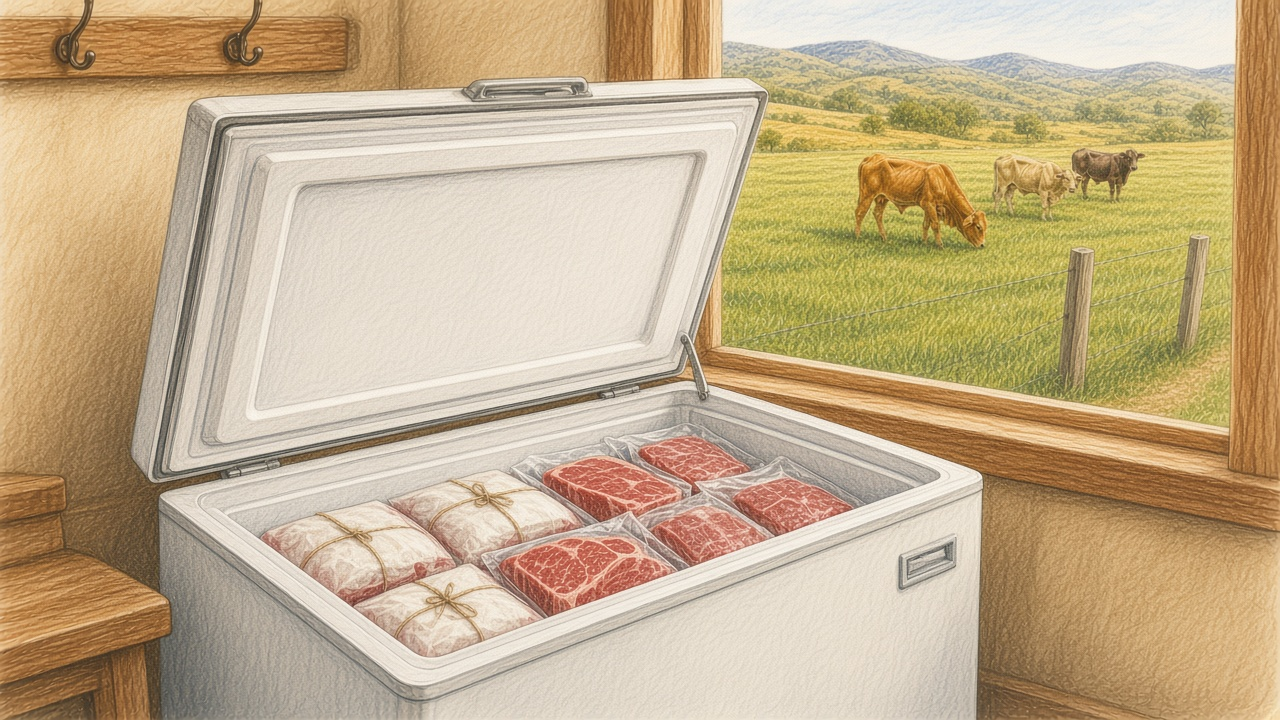
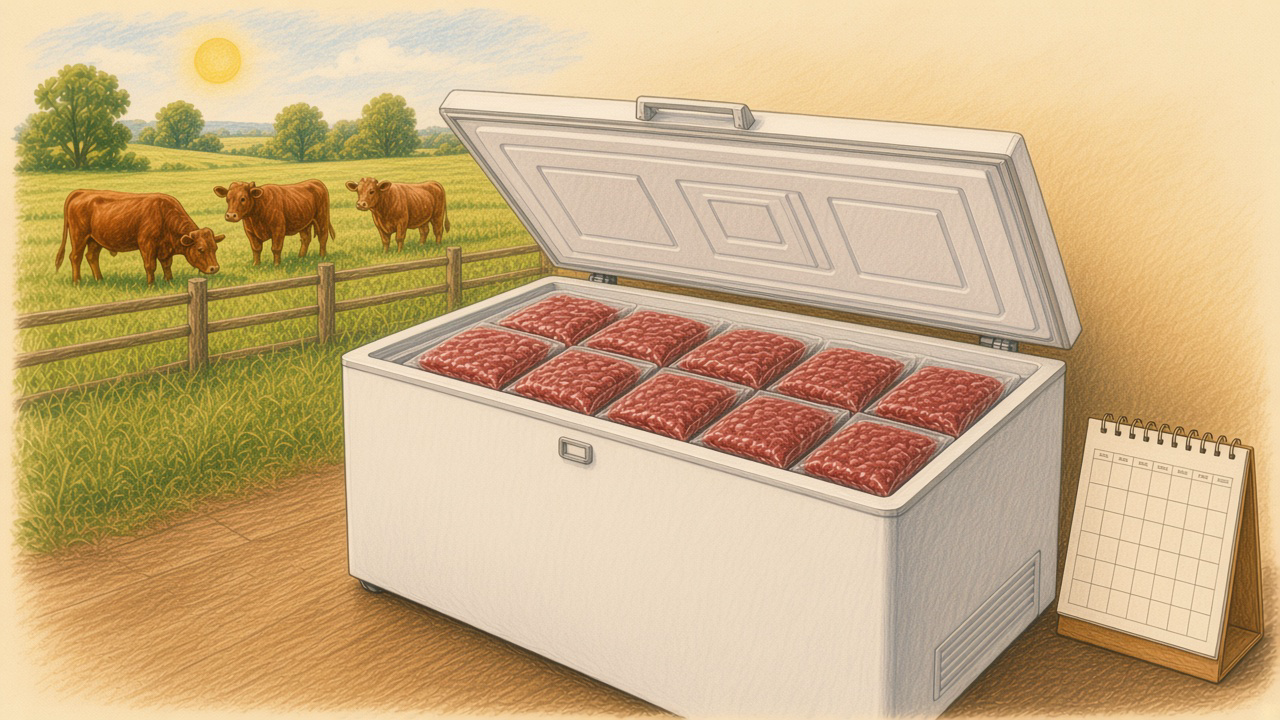
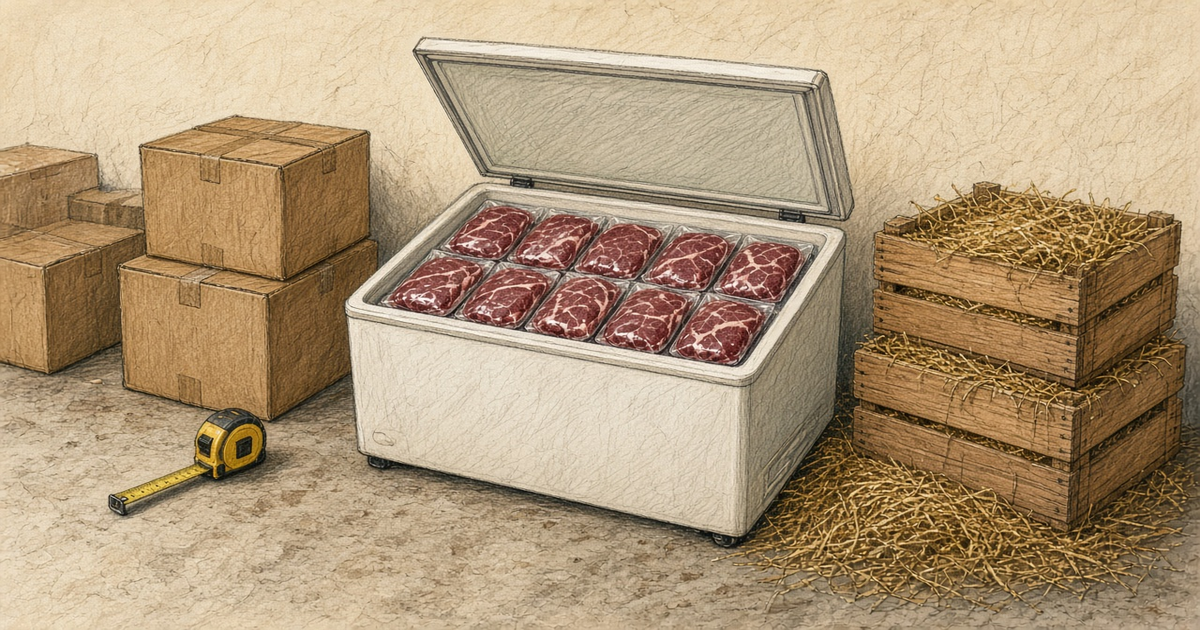
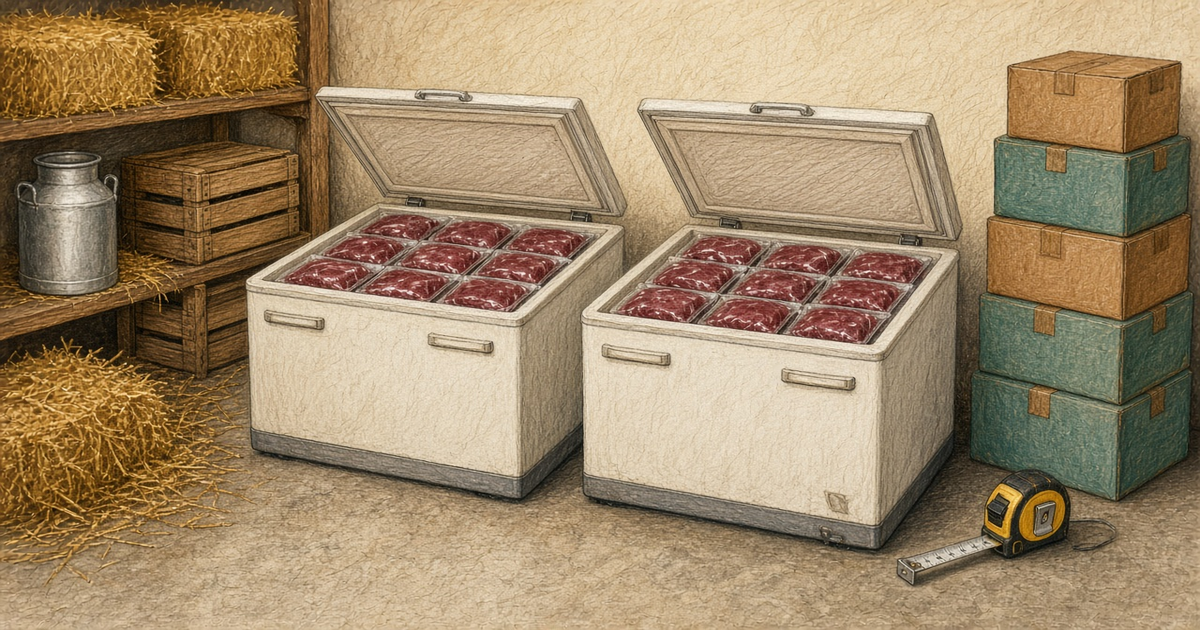
A whole cow is about 400–500 lb take-home and wants 15–20 cu ft of freezer. Why a 15 cu ft chest is tight, 20–25 is safe, and when two boxes win.
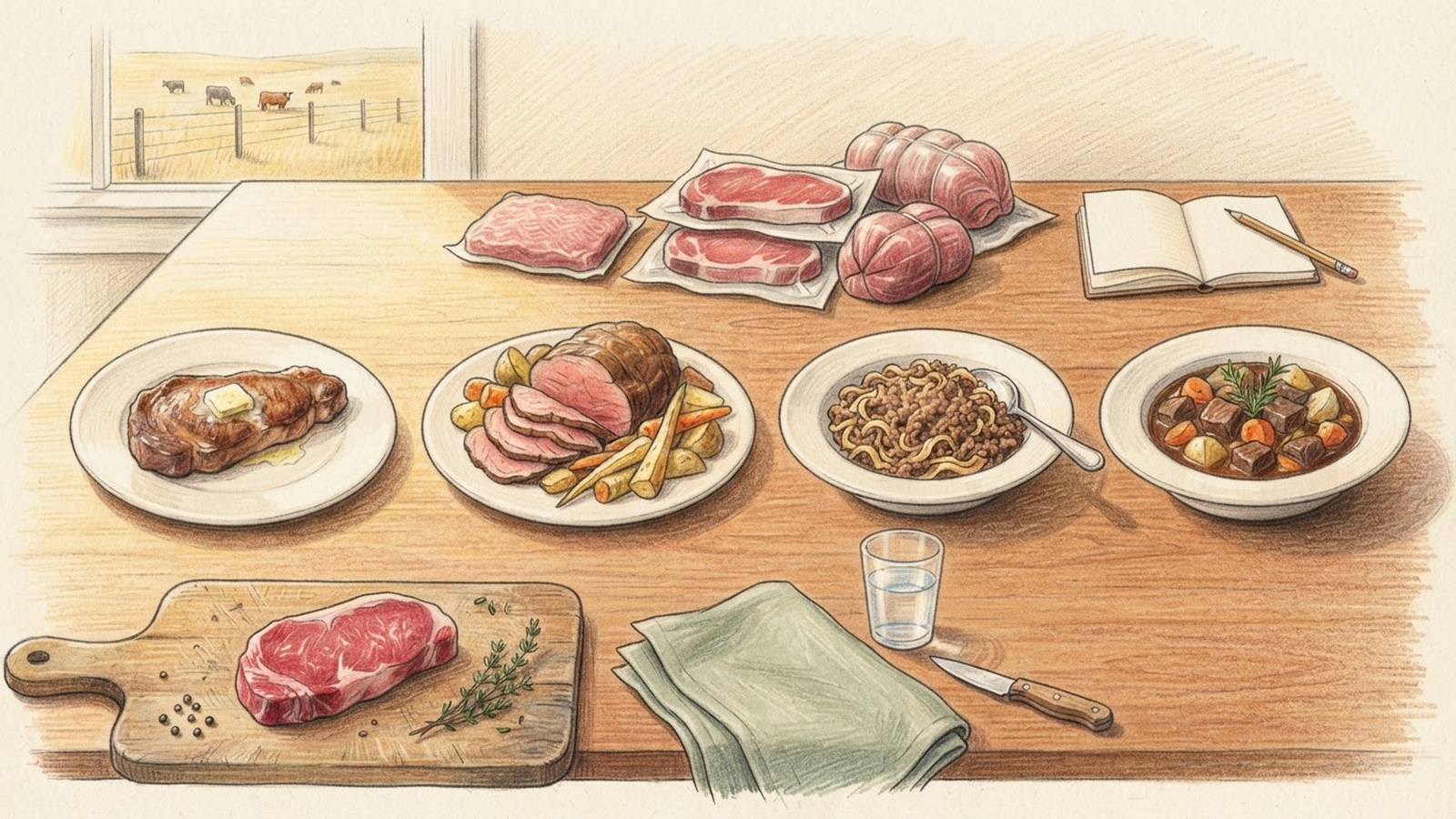
A quarter cow is about 110 lb of beef. That lands near 160 dinners for two adults, or about four to six months of beef nights. Portion math and the cut count.
Yes. A quarter cow (~100 to 125 lb) lasts two people about 8 to 12 months at a normal beef pace. The lb/week math, freezer fit, cost vs grocery, and when an eighth is smarter.
A half cow is 200 to 250 lb of beef. For two adults that is 130 to 240 dinners, or 10 to 18 months. The portion math and the cut count.
About $100 at 2026 USDA averages. $0.94 per hanging pound on an eighth of the carcass plus your slice of a $125 kill fee. Why smaller shares cost a bit more per pound.
About 50 lb of beef, which is 30 to 45 dinners for two adults on normal portions and roughly three months of beef nights. Portion math and the cut count.
A half cow (~200 to 250 lb) usually feeds a family of 4 for about 6 to 12 months. Household table, when a half is too much, and when two families should split.
About $780 at 2026 USDA averages: $0.94 per hanging pound plus a $125 kill fee. Four real butcher price lists and the add-ons that pad the bill.
A $5.50 hanging half cow is about $10 a freezer pound once 60 to 65% take-home and processing are in. Multiply hanging by about 1.6 to 1.8.
An eighth cow (~50 lb) is the classic fit for 1–2 people. Couples usually nail it. A family of 4 may want a quarter.
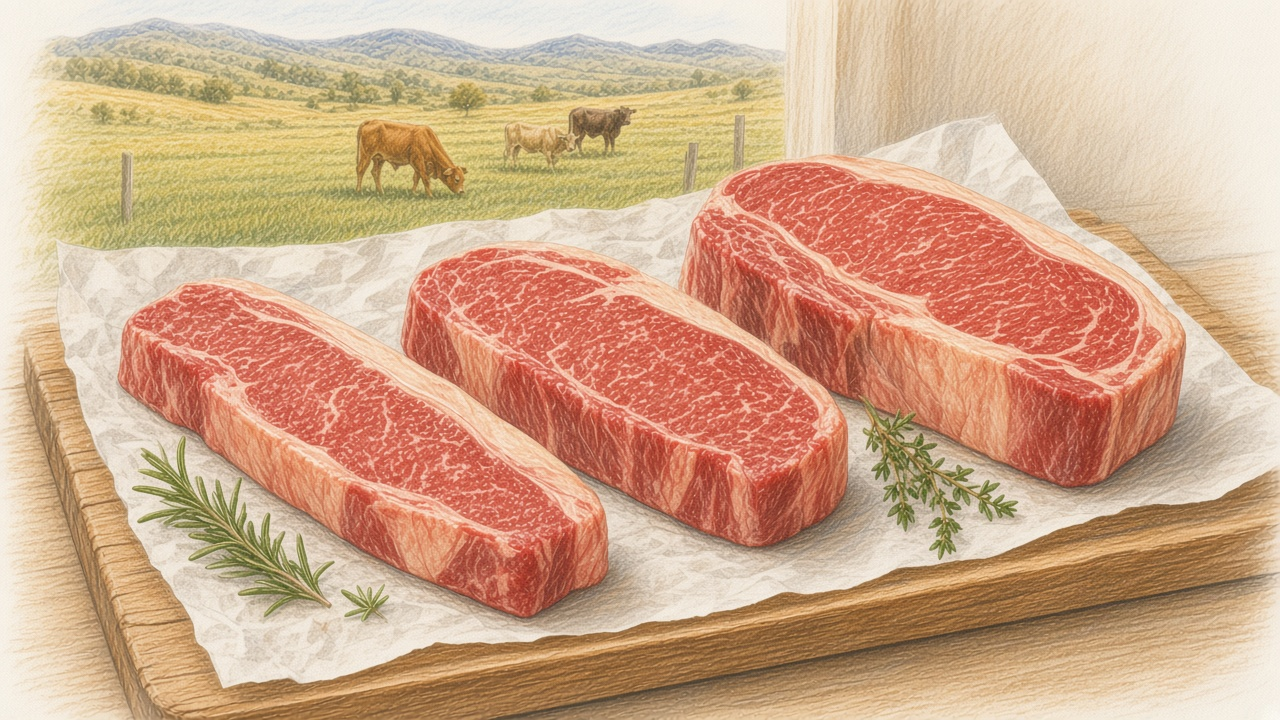
Most cut sheets offer 3/4 to 1 1/2 inch. Go 1 1/4 inch for grilling. Cut-by-cut thickness cheat sheet and the fewer-steaks trade-off.
An eighth cow is ~50 lb. A couple usually lasts 4 to 6 months. A family of 4 is about 6 to 12 weeks. USDA math, freezer life, and when to buy a quarter.
Grass-fed steers dress about 58% vs 63% for grain-fed. What that means for a quarter cow in pounds, and why paying by hanging weight protects you.
Yes. A split quarter gives each couple about 58 lb of beef for about $575, roughly six months of eating. Here is the math, the cut sheet rule, and when an eighth is easier.
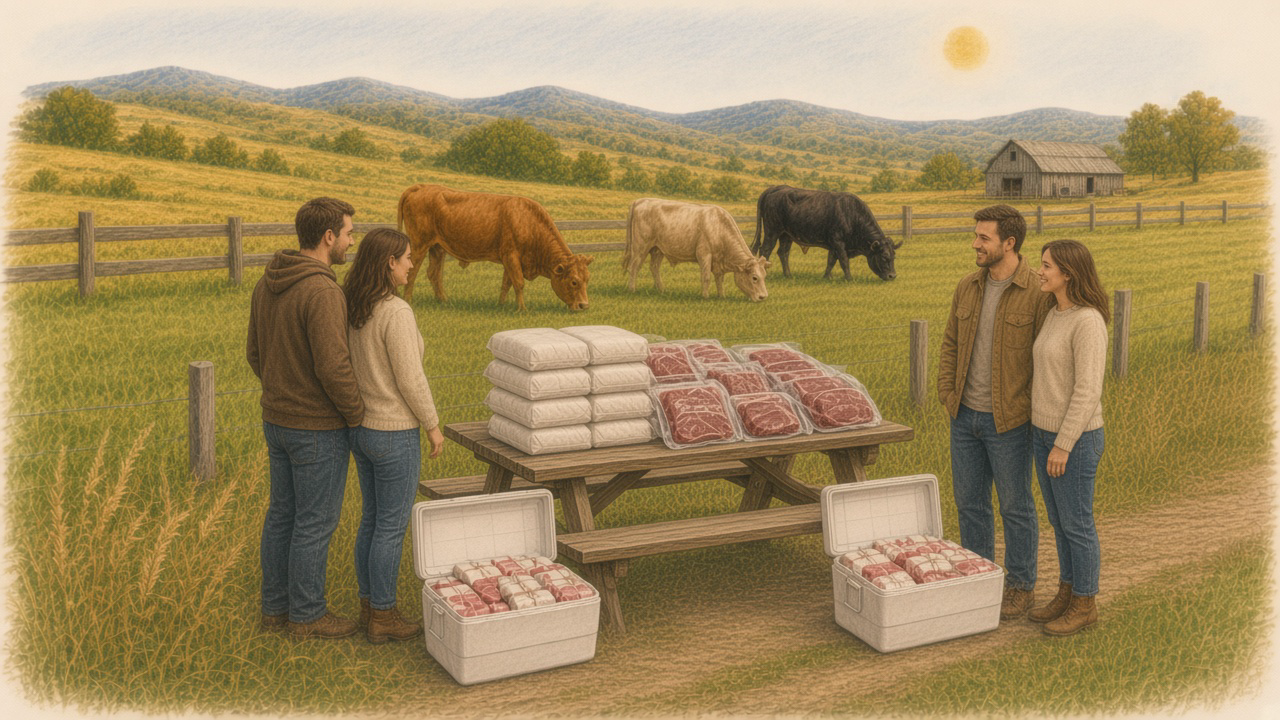
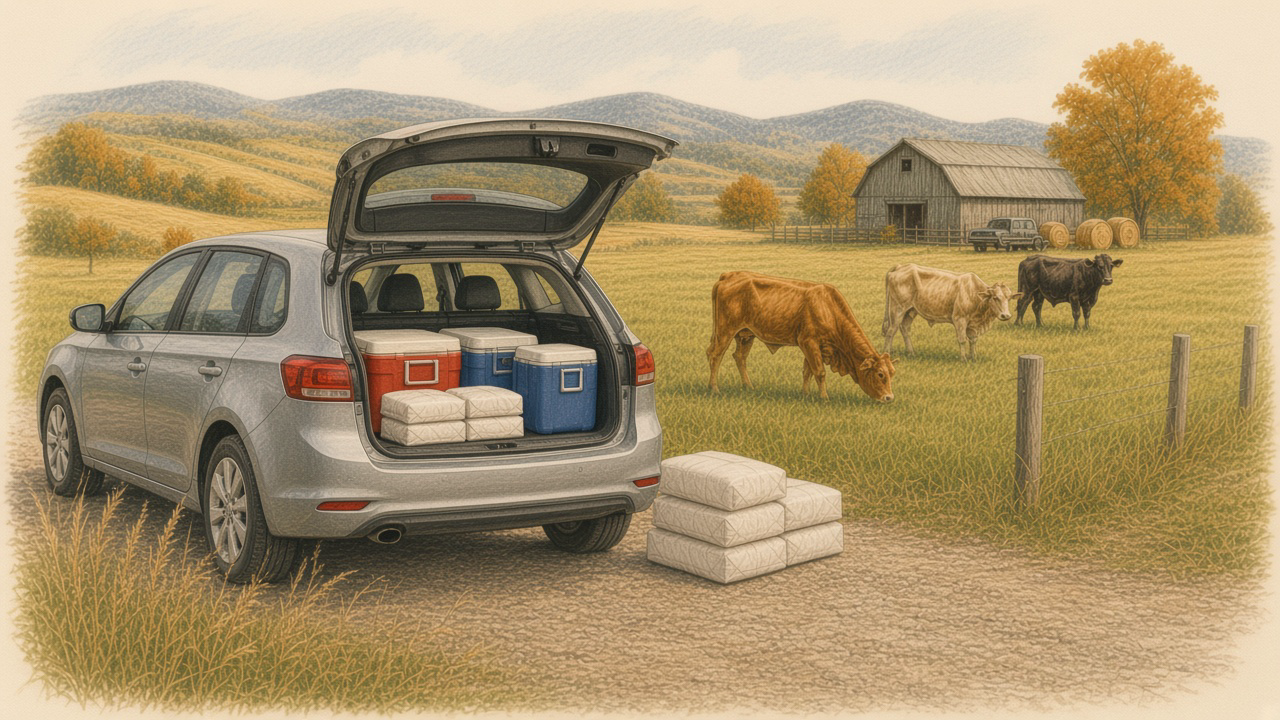
Pickup day is 100 to 125 lb of frozen beef and a 2-hour clock. How many coolers to bring, what to do the night before, and getting it into the freezer at 0°F.
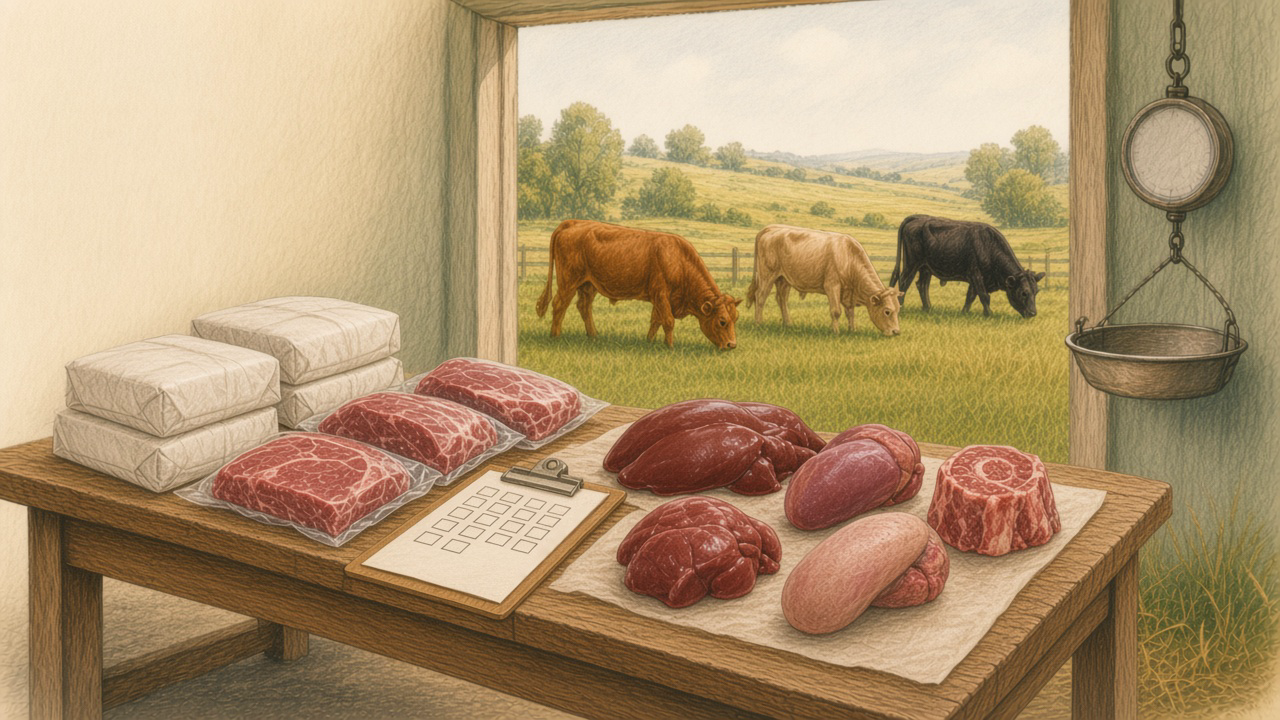
Only if you ask. One 1,400 lb steer has about 25 lb of liver, heart, tongue, and oxtail, so your quarter share is about 6 lb. How butchers split them and what it costs.
About $390 at 2026 USDA averages: $0.94 per hanging pound plus half a $125 kill fee. Four real butcher price lists and the add-ons that pad the bill.
Yes. A half cow is two mixed quarters. At 2026 USDA averages each family pays about $1,200 and takes home about 110 lb.
Some farms need 3 weeks. Others are booked a year out. Real farm and butcher lead times, why fall fills by August, and your move if you are late.
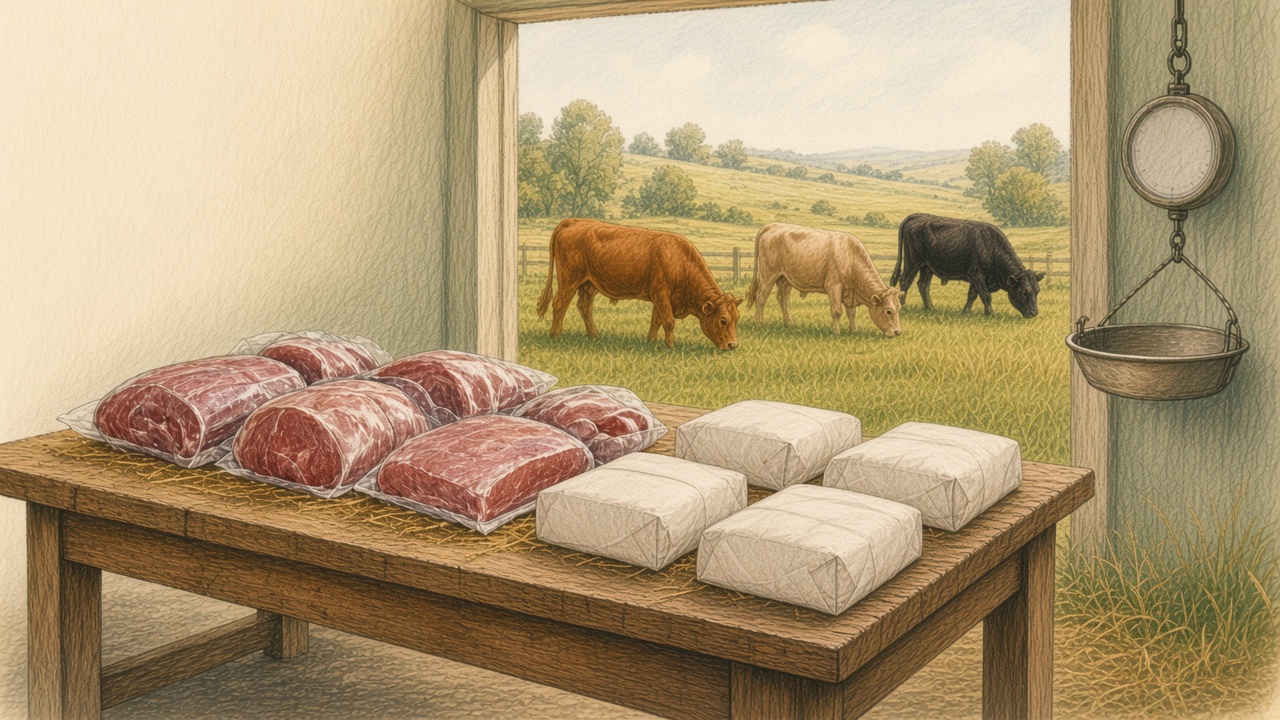
Boneless can shrink a quarter cow box by about 18 lb. The edible meat is the same. Yield math, taste tests, and when bone-in is worth it.
Yes. Fridge-thawed cow-share beef can go back in the freezer. USDA rules, quality tradeoffs, ground vs steaks, and what to do after a power outage.
Most farms ask $200 to $300 to hold a quarter cow. USDA's 2026 average is $262. What the deposit covers, when the rest is due, and why it rarely comes back.
Vacuum-sealed beef at 0°F stays safe indefinitely. For best taste, plan on about a year for steaks and roasts and 3 to 4 months for ground. Fridge times too.
A half cow (~200 to 250 lb) usually lasts a family of 4 about 6 to 12 months. Household pace math, freezer life, and when a half is too much beef.
Farms quote $/lb hanging. Grocery is take-home. Convert hanging $/lb to freezer $/lb (~60–70% yield) so the cheap farm stays cheap.
Cut-and-wrap on a quarter cow usually runs about $130–$225 ($0.75–$1.25/lb hanging). Kill fee, vacuum seal, and all-in vs hanging-only quotes.
A quarter cow (~100–125 lb) is the classic fit for a family of 4. Couples often prefer an eighth (~50 lb). Bigger households may want a half.
A quarter cow (~100–125 lb) often lasts a family of 4 about 3–6 months of beef meals. Freezer life, cook-through pace, and when an eighth is smarter.
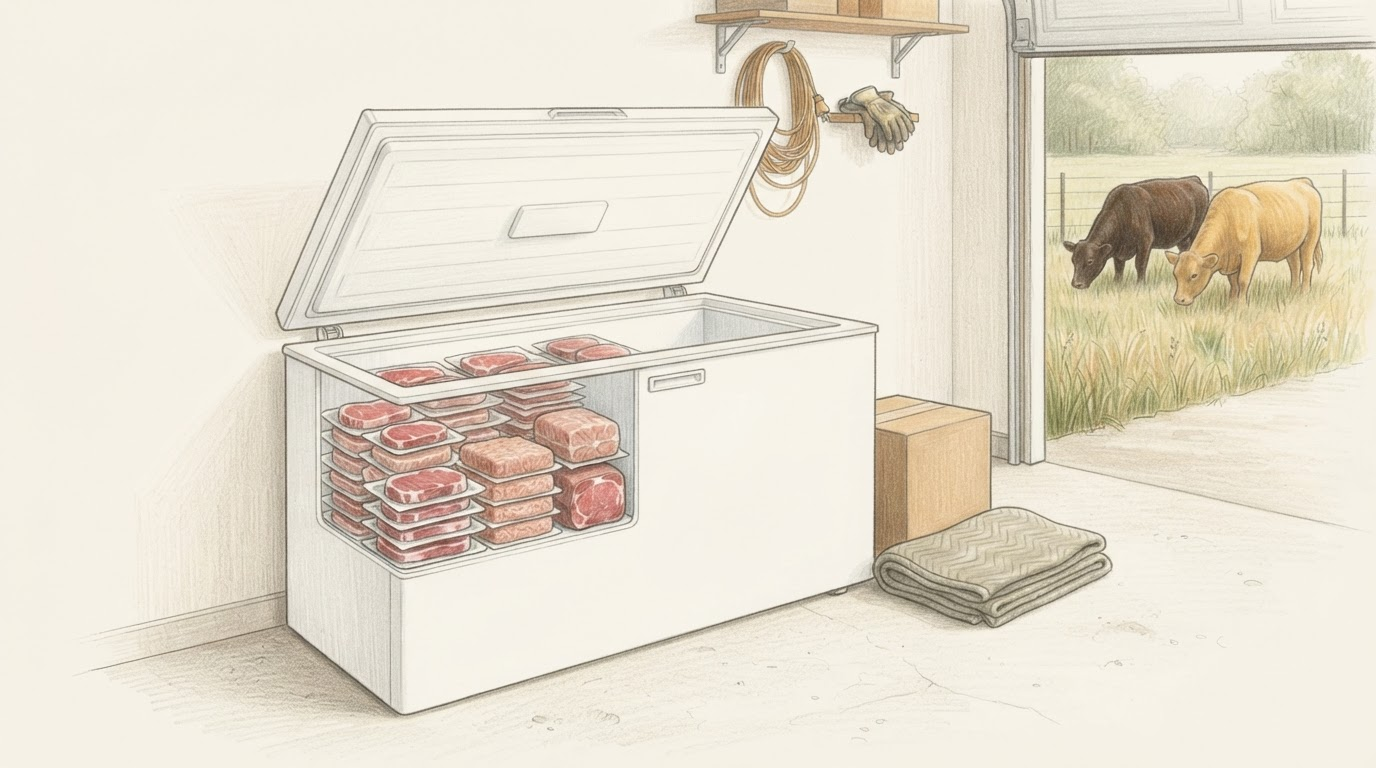
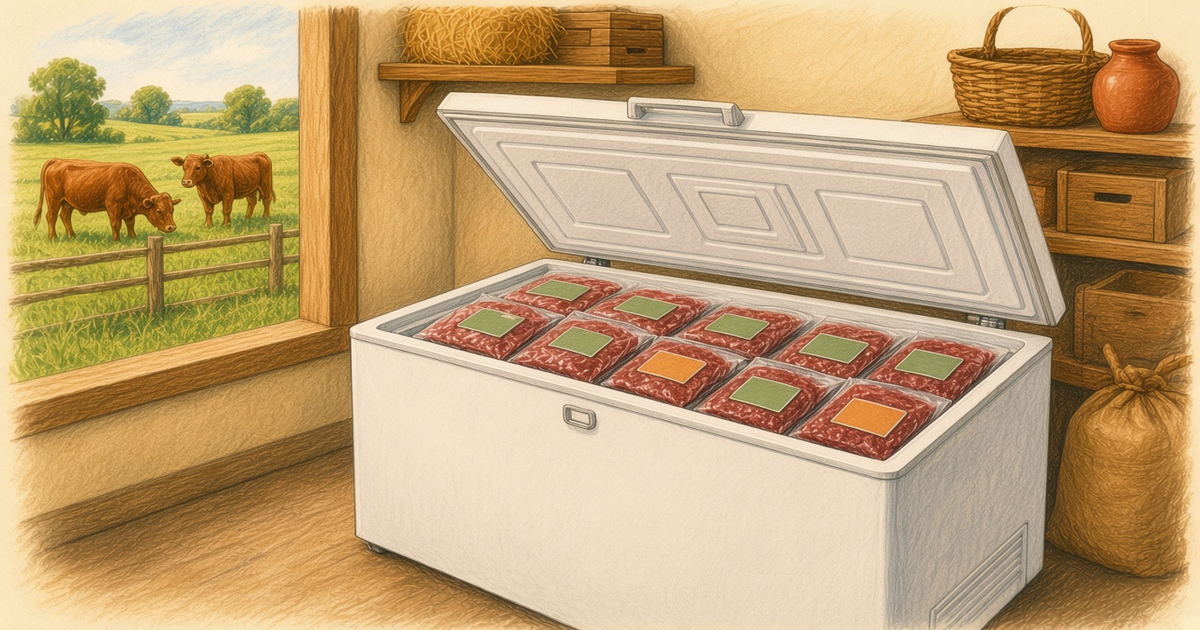
A quarter cow (~100–125 lb) usually wants a 5–7 cu ft chest freezer. Size bands, why buy one up, chest vs upright, and what to plug in before pickup.
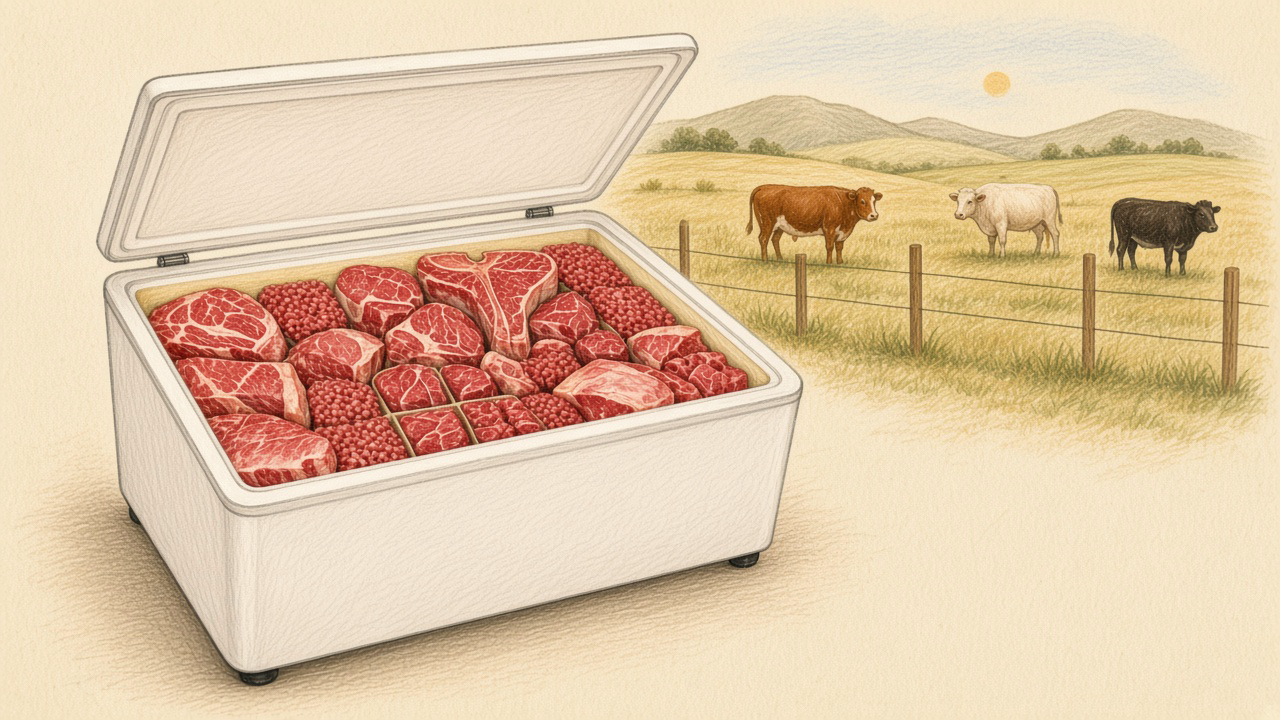
A half cow (~200–250 lb) usually wants a 9–15 cu ft chest freezer. Size bands, why buy one up, chest vs upright, and what to plug in before pickup.
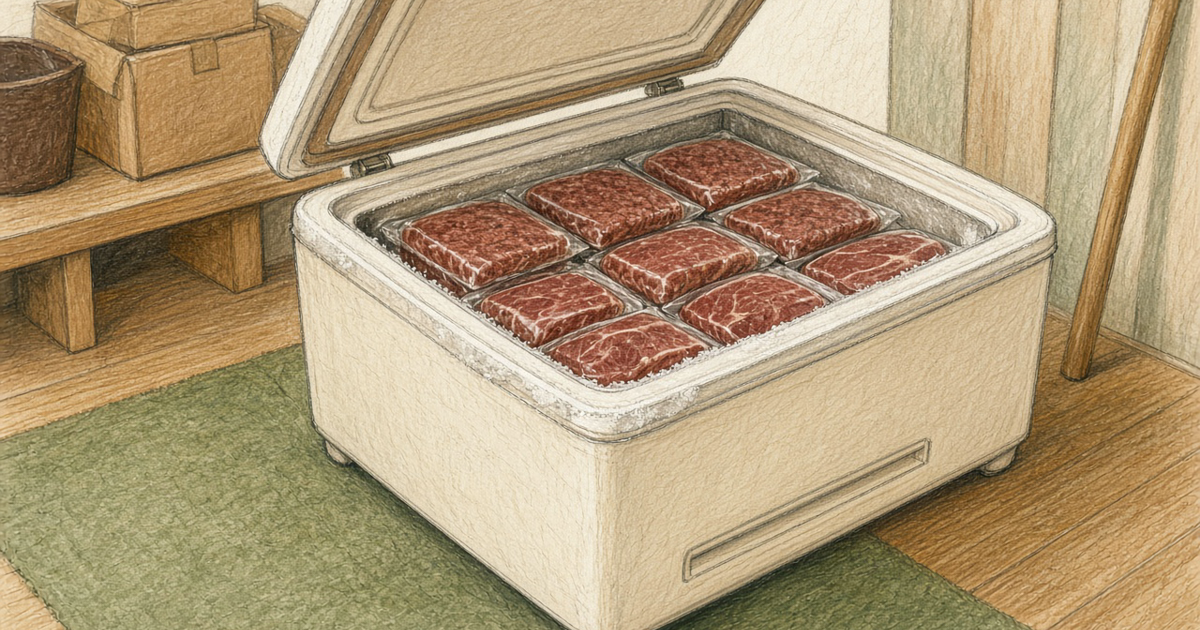
About 2–3 cubic feet for ~50 lb take-home. Fridge freezers often work. Appliance math, packing tips, and eighth vs quarter.
A half cow needs about 8–10 cubic feet of freezer space for 200–250 lb take-home. Not the fridge freezer. Chest vs upright, packing, and what to buy before pickup.
A whole cow needs about 15–20 cubic feet of freezer space for 400–500 lb take-home. Large chest or two freezers, packing density, and why a lot of people split it.
A quarter cow needs about 5–7 cubic feet of freezer space for 100–125 lb take-home. Chest vs upright, pack size, and what actually fits before pickup day.
Freezer layout, labeling, and long-term storage for quarter and half shares.
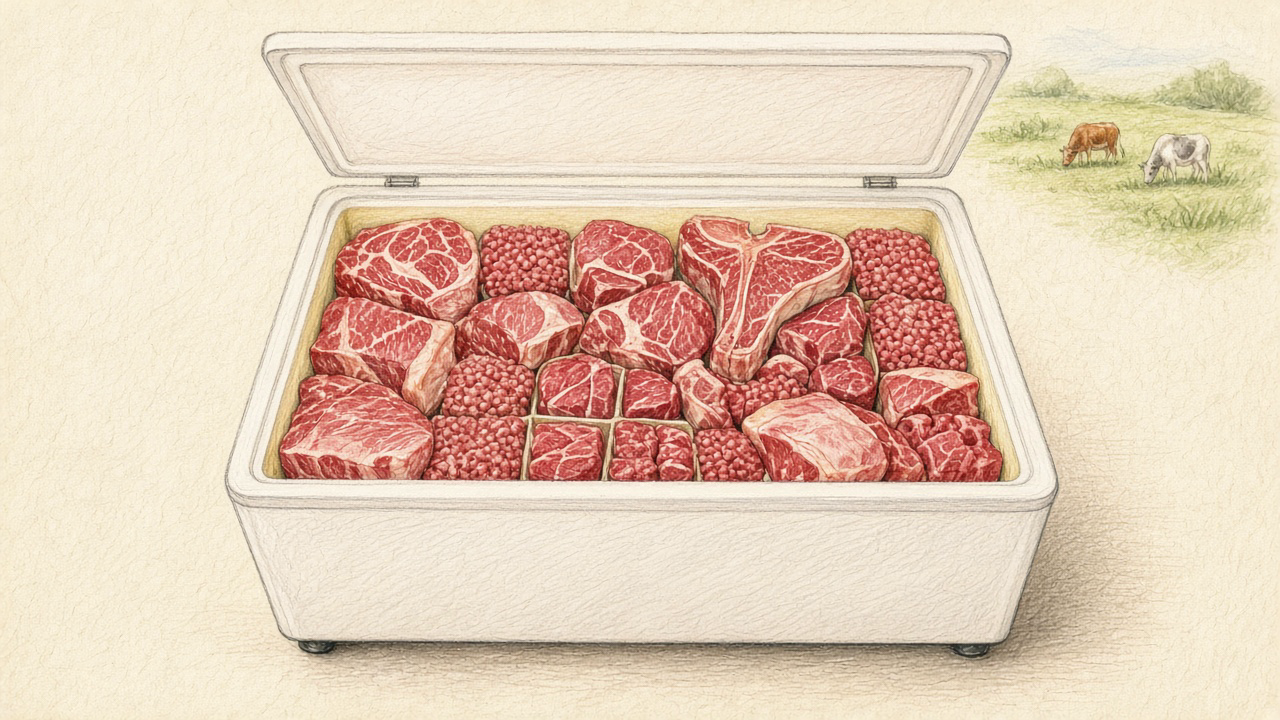
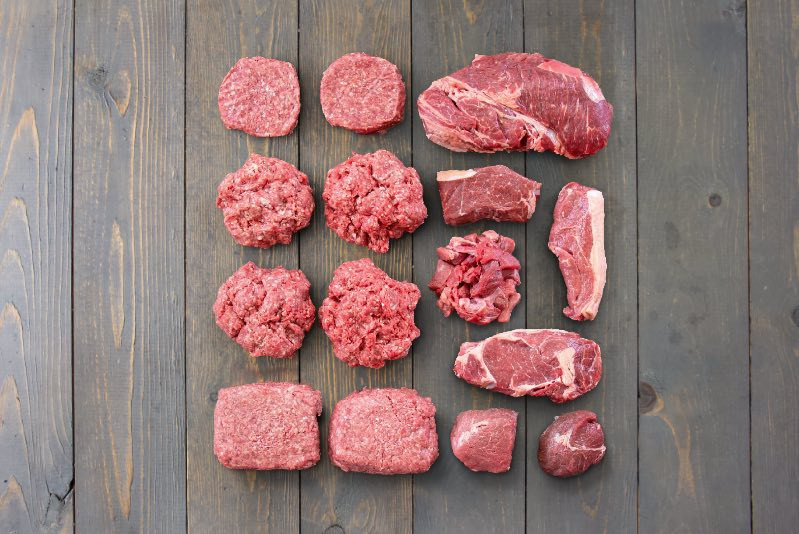
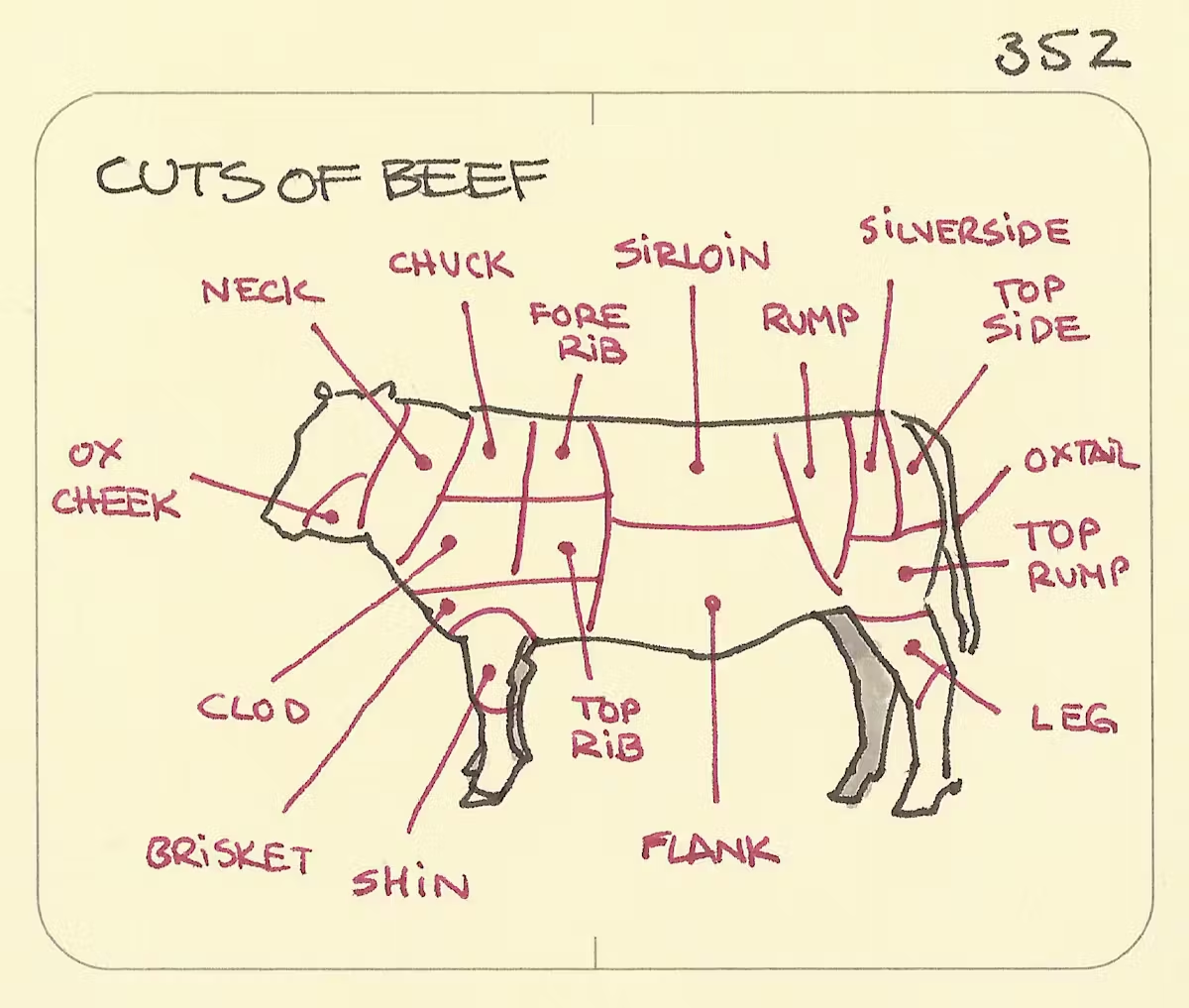
Steak thickness, roasts, ground beef options, and specialty cuts on your cut sheet.
What drives share pricing, deposits, and how to compare value across farms.
Freezer space, organization, and temperature tips for storing a whole cow.