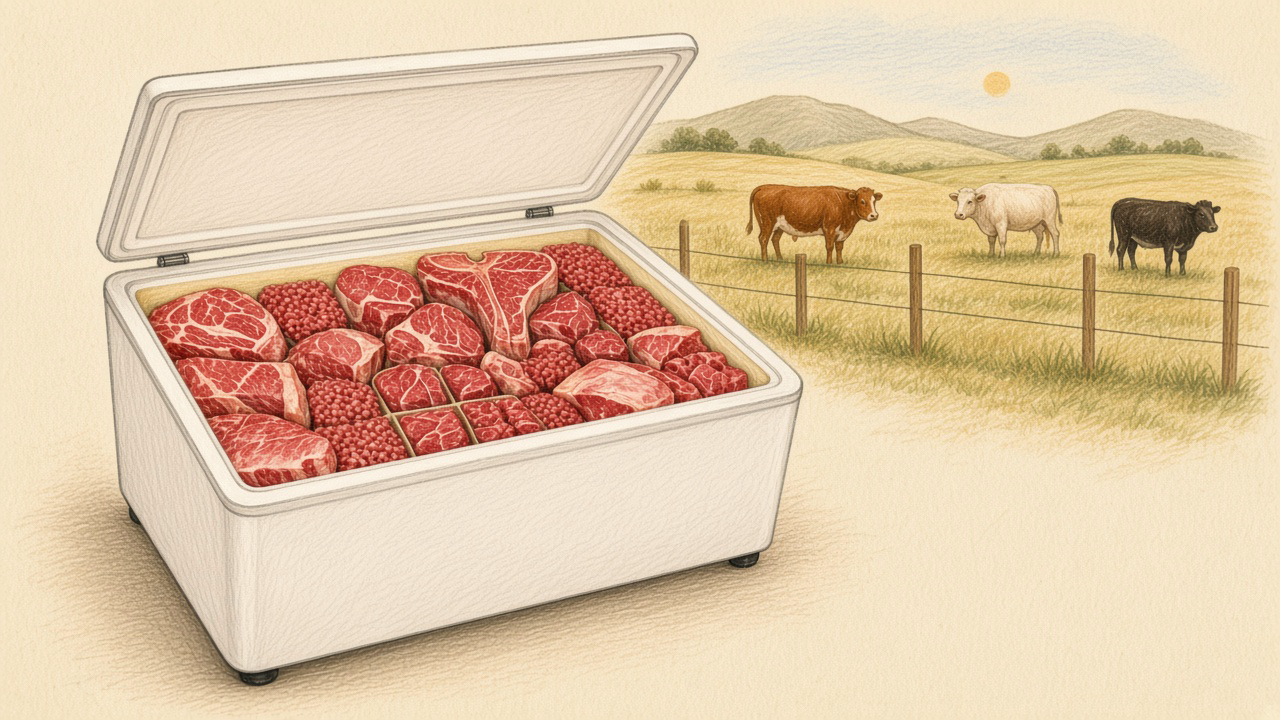
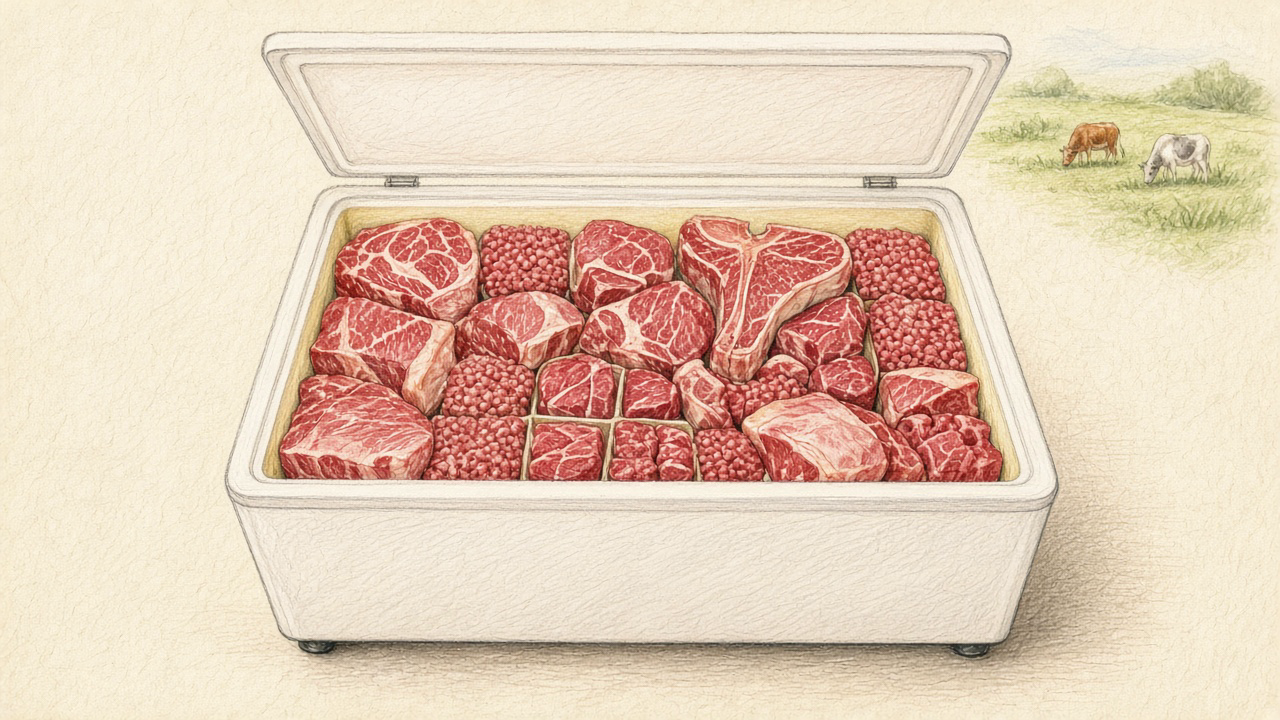
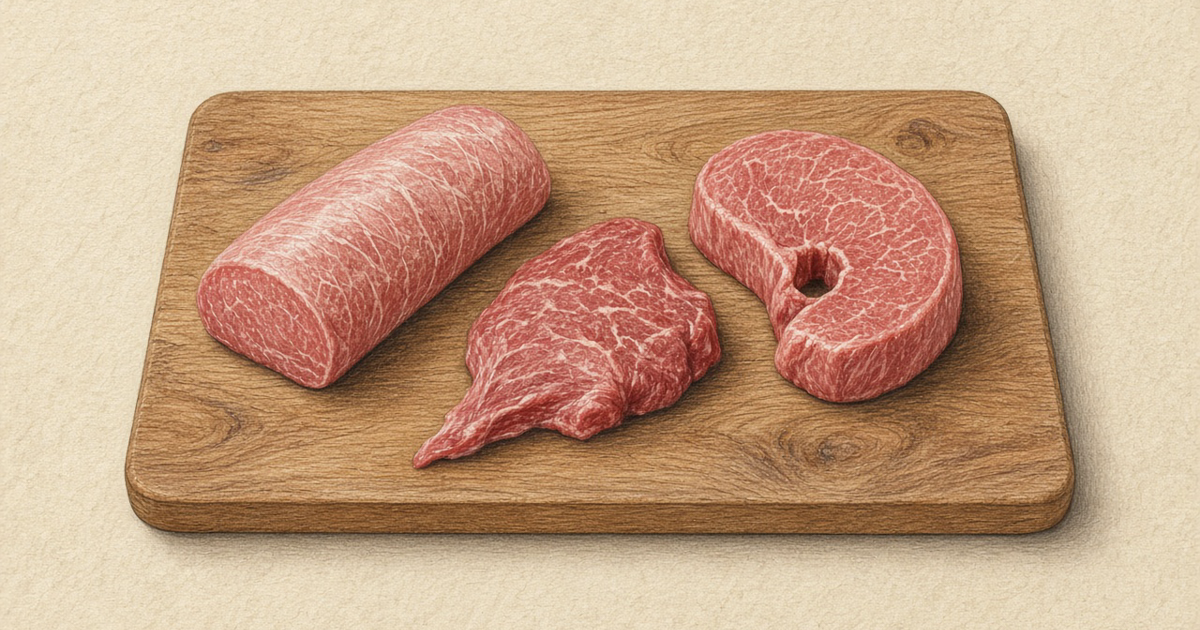
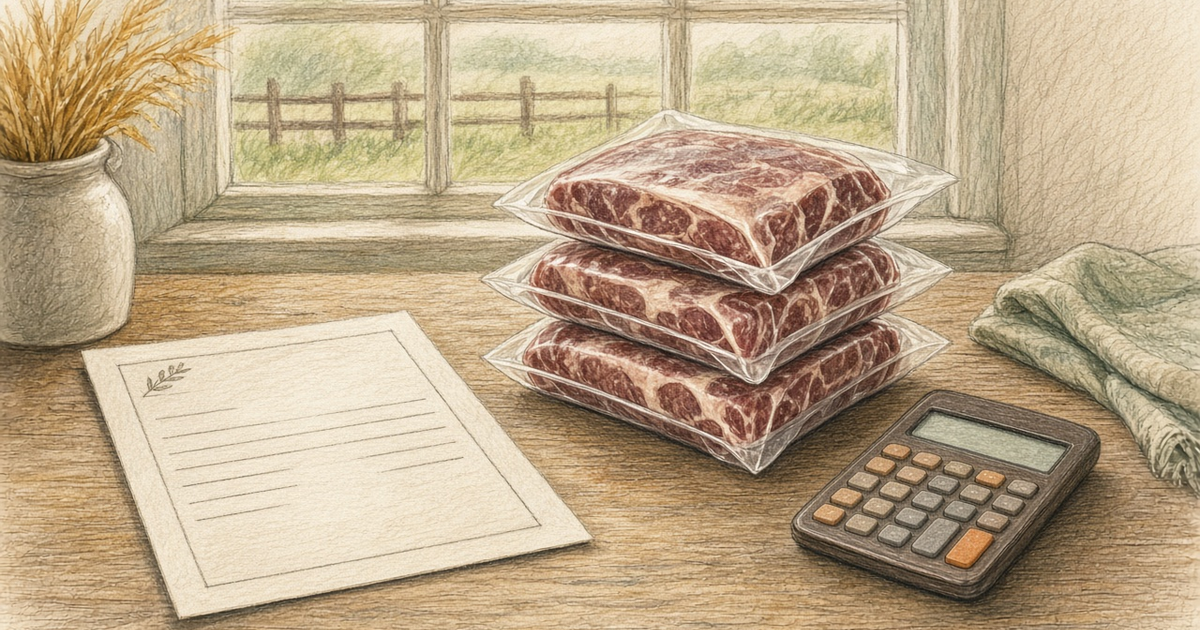
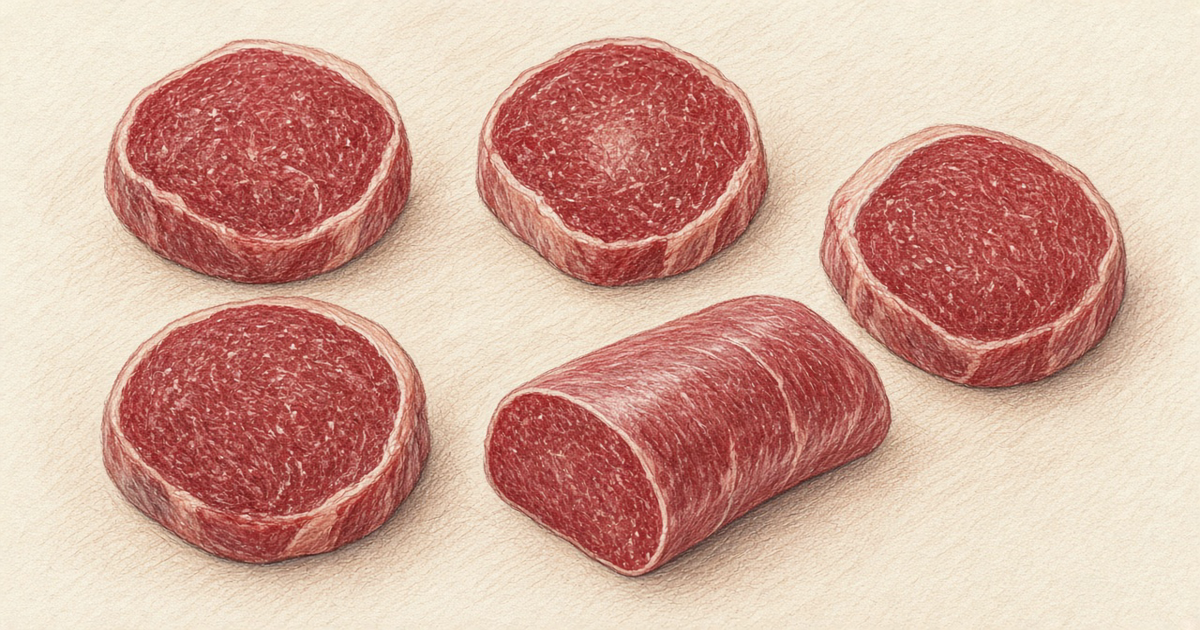
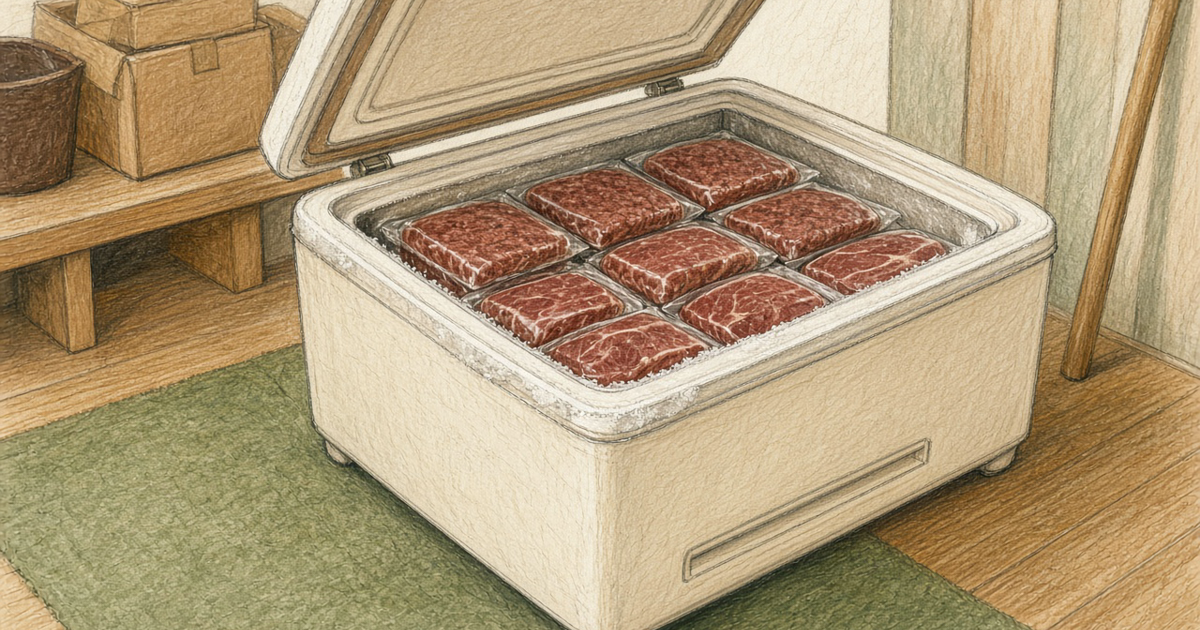
Bulk beef shares — overviews, comparisons, cut sheets, storage, and how beef is raised.
6 topics, 86 articles
5 guides
Quarter, half, and whole cow share basics — yield, freezer space, and how to get started.
24 articles
First-time buyer timelines, share sizes, and what to expect from signup to pickup.
16 articles
Quarter vs half vs whole shares, plus grocery vs farm pricing — so you can pick what fits your household and budget.
39 articles
Pricing, cut sheets, freezer storage, and planning your bulk beef purchase.
1 article
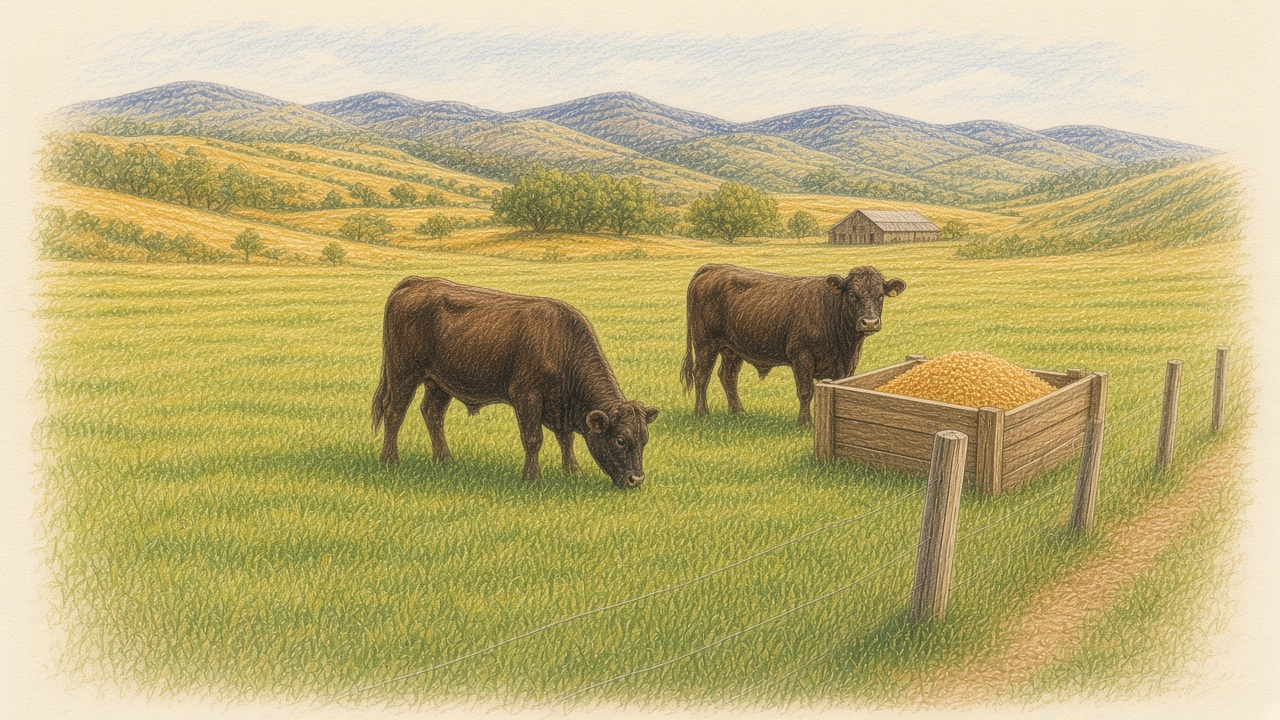
Grass-fed vs grain-finished and how farming practices affect your share.
State and regional guides for finding and evaluating local beef farms.
Newest first. Pick a topic above to narrow the list.
0°F (-18°C) or colder. USDA says food stays safe indefinitely at a steady 0°F. Dial settings, a cheap thermometer, garage units, and power-outage rules.
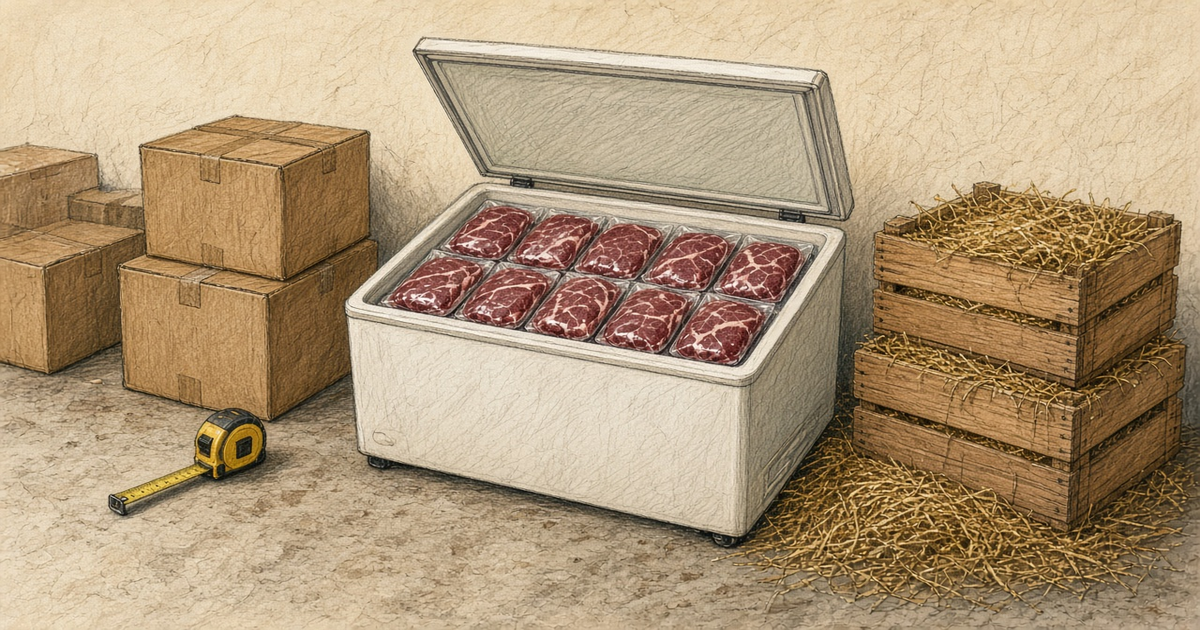
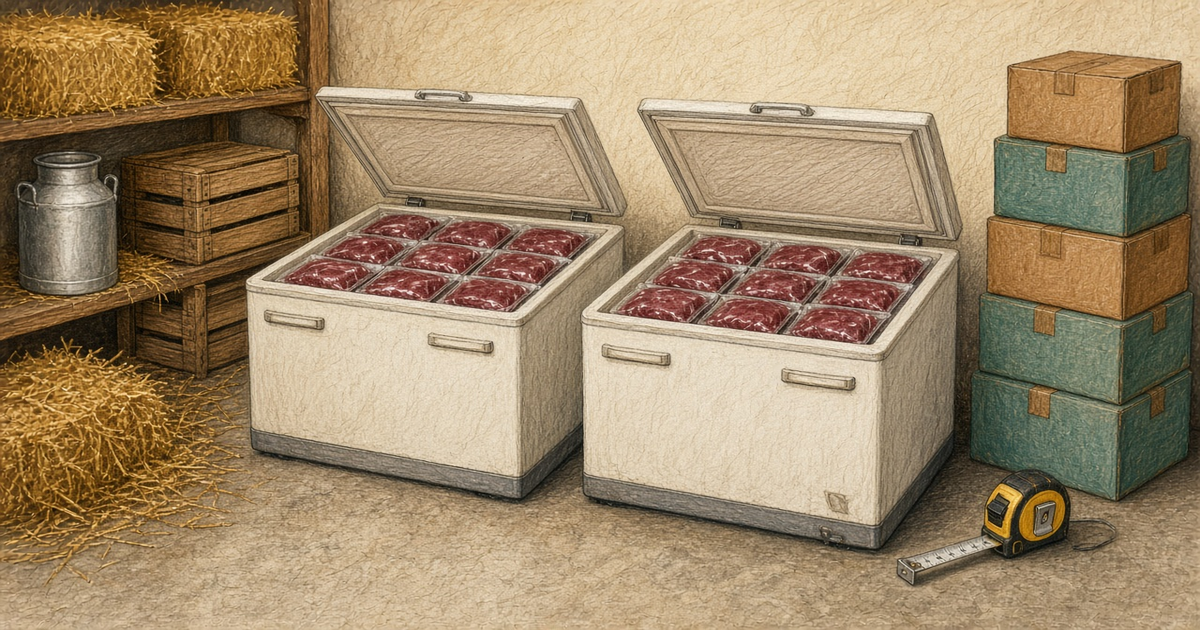
A whole cow is about 400–500 lb take-home and wants 15–20 cu ft of freezer. Why a 15 cu ft chest is tight, 20–25 is safe, and when two boxes win.
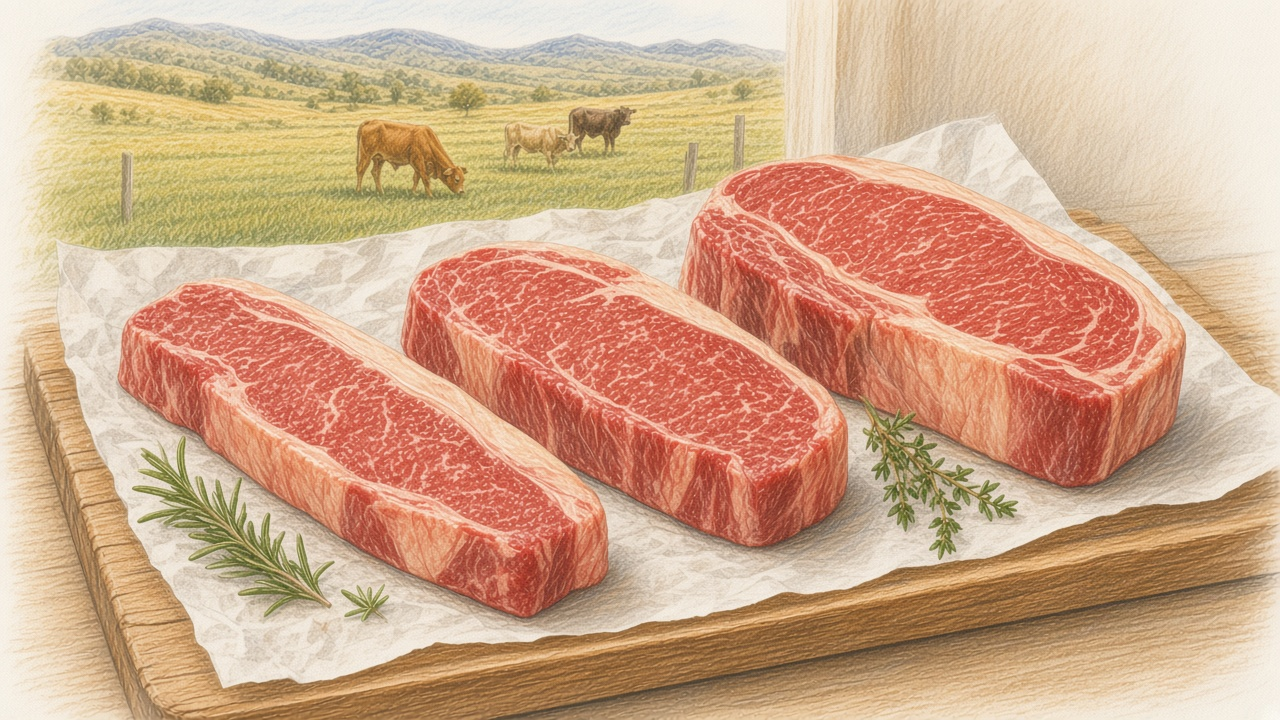
A whole cow usually gives you about 8 to 16 filet steaks from 4 to 8 lb of tenderloin. Two tenderloins, the thickness math, and how to have them cut.
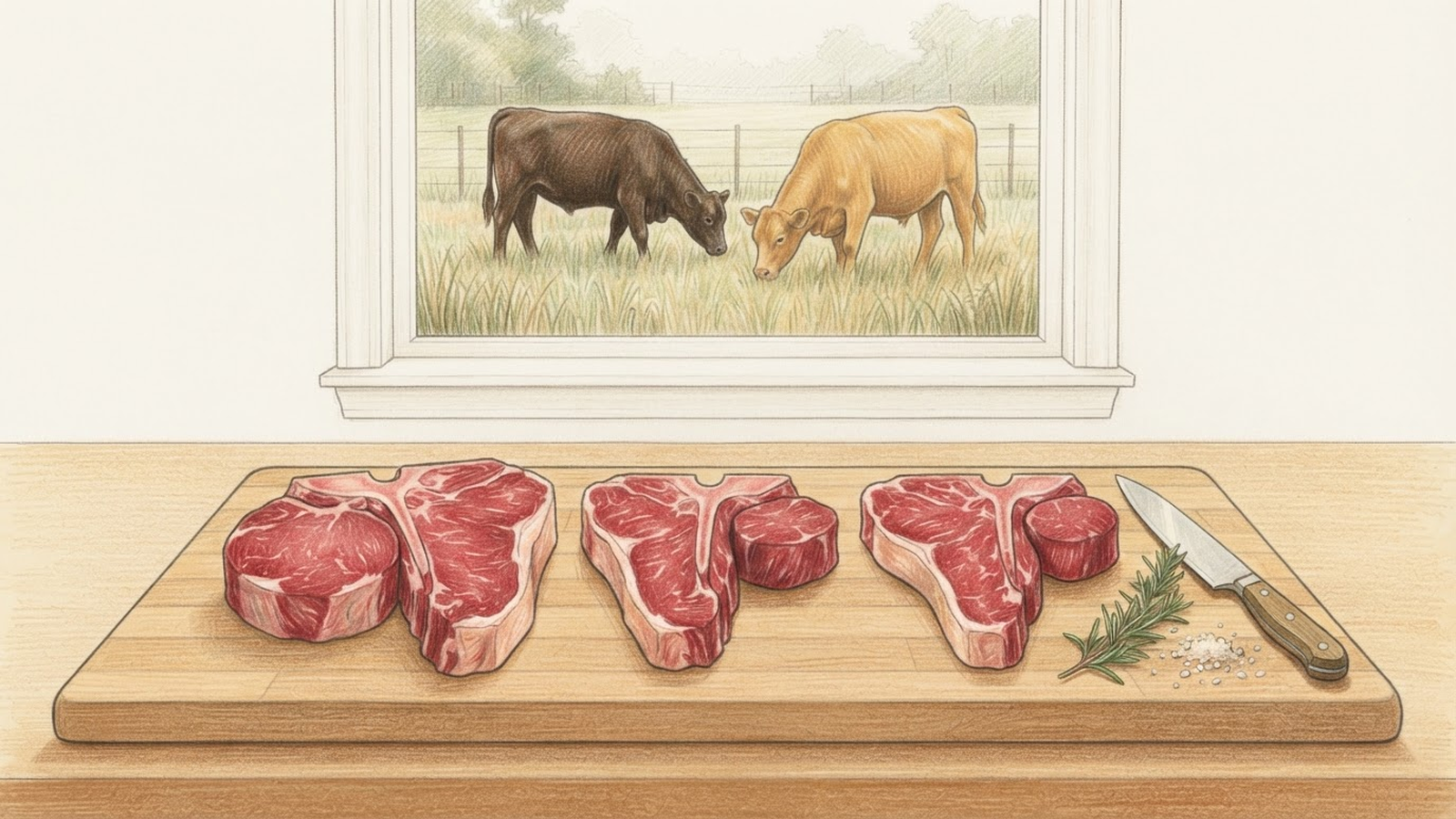
A quarter cow usually gives you 2 to 3 bone-in loin steaks (about 4 to 8 lb). The 1.25 inch rule, why the count is small, and how to cut that loin.
A year of Walmart beef for a whole cow's take-home runs about $3,800. One farm whole is about $4,900 after hanging weight and processing. Same mix.
A quarter cow is about 110 lb of beef. That lands near 160 dinners for two adults, or about four to six months of beef nights. Portion math and the cut count.
Yes. A quarter cow (~100 to 125 lb) lasts two people about 8 to 12 months at a normal beef pace. The lb/week math, freezer fit, cost vs grocery, and when an eighth is smarter.
A half cow is 200 to 250 lb of beef. For two adults that is 130 to 240 dinners, or 10 to 18 months. The portion math and the cut count.
About $100 at 2026 USDA averages. $0.94 per hanging pound on an eighth of the carcass plus your slice of a $125 kill fee. Why smaller shares cost a bit more per pound.
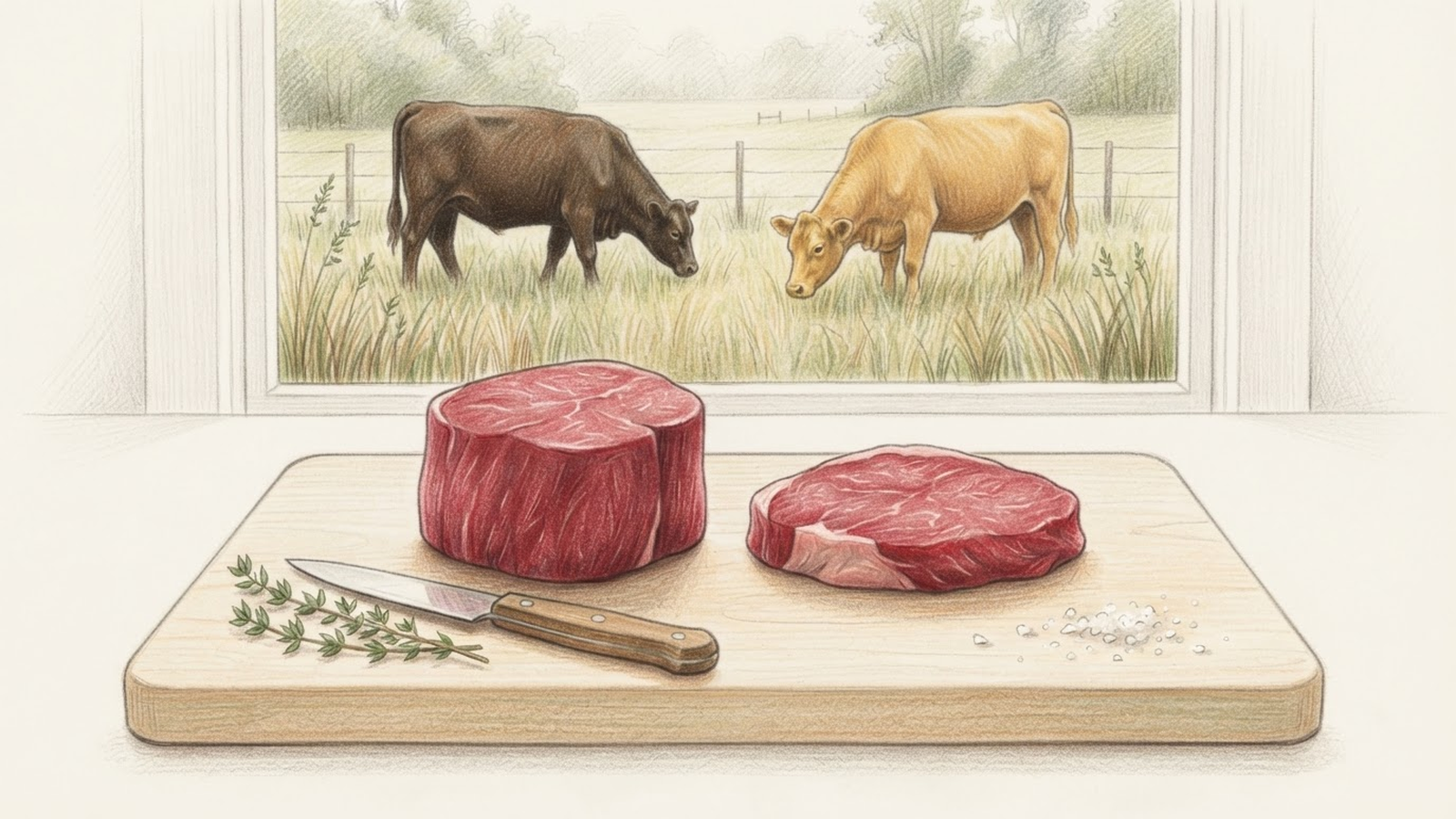
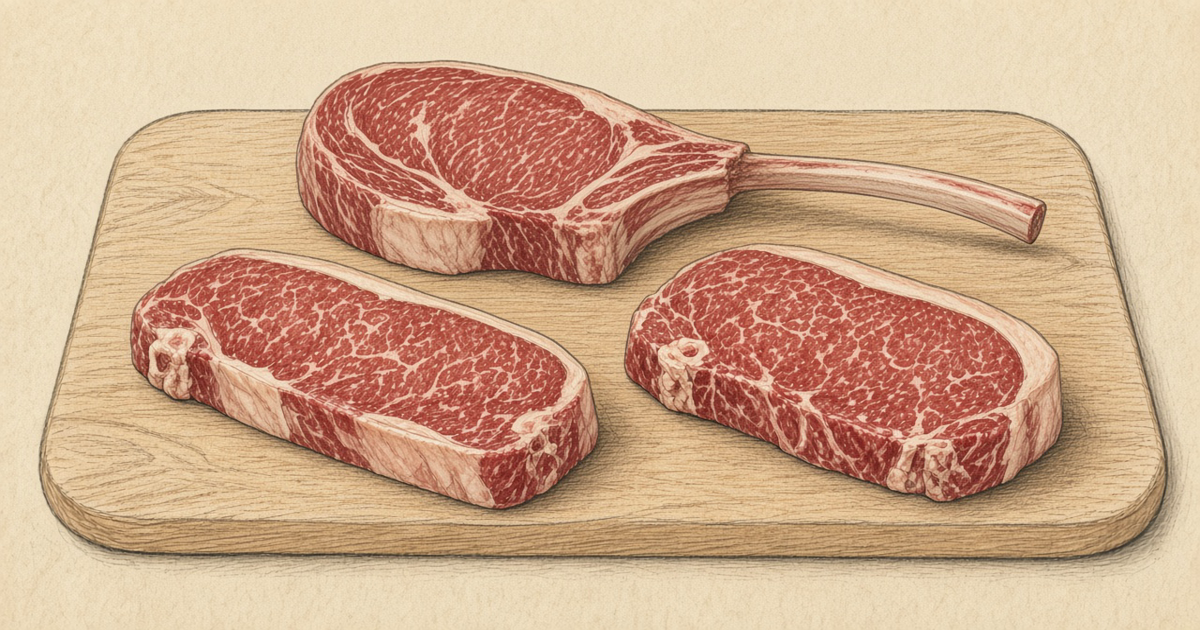
Same bone, different deal. The 1.25 inch filet rule that decides the label, why a half cow gives you 2 or 3, and which one to write on the sheet.
About 50 lb of beef, which is 30 to 45 dinners for two adults on normal portions and roughly three months of beef nights. Portion math and the cut count.
A half cow (~200 to 250 lb) usually feeds a family of 4 for about 6 to 12 months. Household table, when a half is too much, and when two families should split.
Six months of Costco beef for a half cow's take-home runs about $1,860. One farm half is about $2,000. Same mix. 26 warehouse trips vs one pickup.
About $780 at 2026 USDA averages: $0.94 per hanging pound plus a $125 kill fee. Four real butcher price lists and the add-ons that pad the bill.
A $5.50 hanging half cow is about $10 a freezer pound once 60 to 65% take-home and processing are in. Multiply hanging by about 1.6 to 1.8.
A Texas Roadhouse 12 oz ribeye is $24.99. The same 12 oz from a farm quarter is about $7 at the blended freezer price.
A $5.50/lb hanging price is about $9.80/lb in your freezer. How to compare it to a grocery family pack, and when the farm wins.
An eighth cow (~50 lb) is the classic fit for 1–2 people. Couples usually nail it. A family of 4 may want a quarter.
Most cut sheets offer 3/4 to 1 1/2 inch. Go 1 1/4 inch for grilling. Cut-by-cut thickness cheat sheet and the fewer-steaks trade-off.
An eighth cow is ~50 lb. A couple usually lasts 4 to 6 months. A family of 4 is about 6 to 12 weeks. USDA math, freezer life, and when to buy a quarter.
Grass-fed steers dress about 58% vs 63% for grain-fed. What that means for a quarter cow in pounds, and why paying by hanging weight protects you.
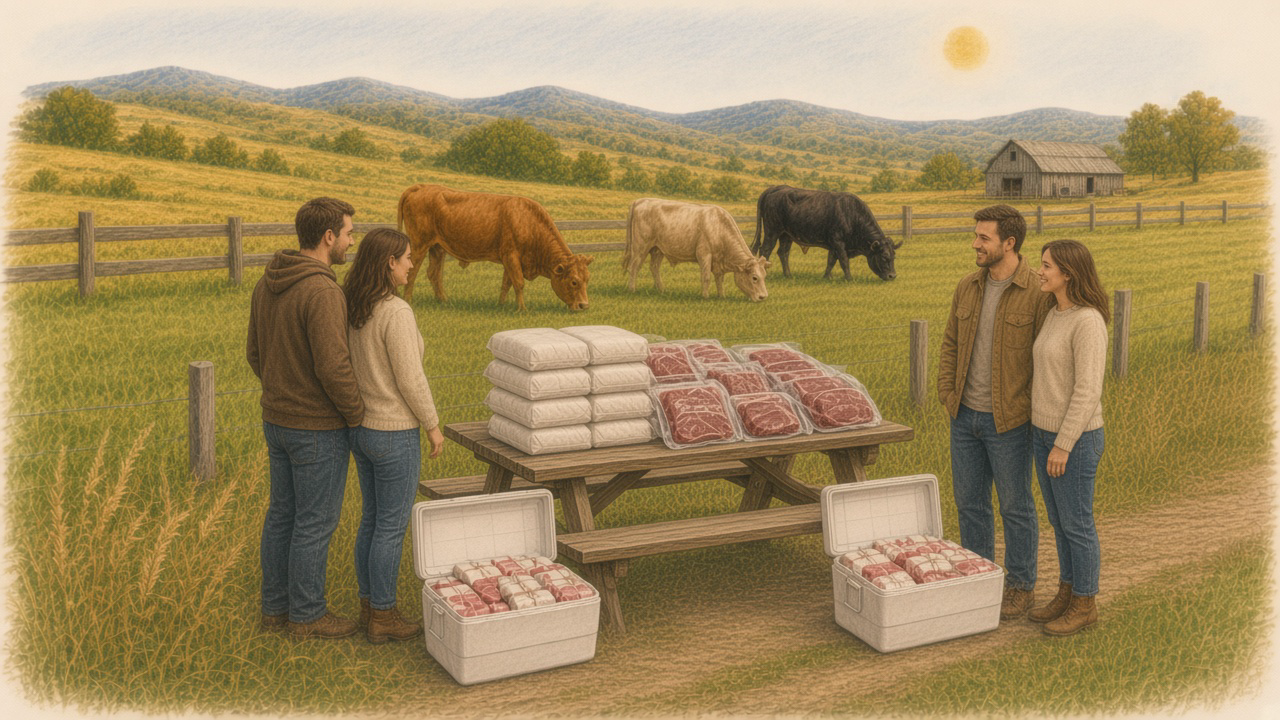
Yes. A split quarter gives each couple about 58 lb of beef for about $575, roughly six months of eating. Here is the math, the cut sheet rule, and when an eighth is easier.
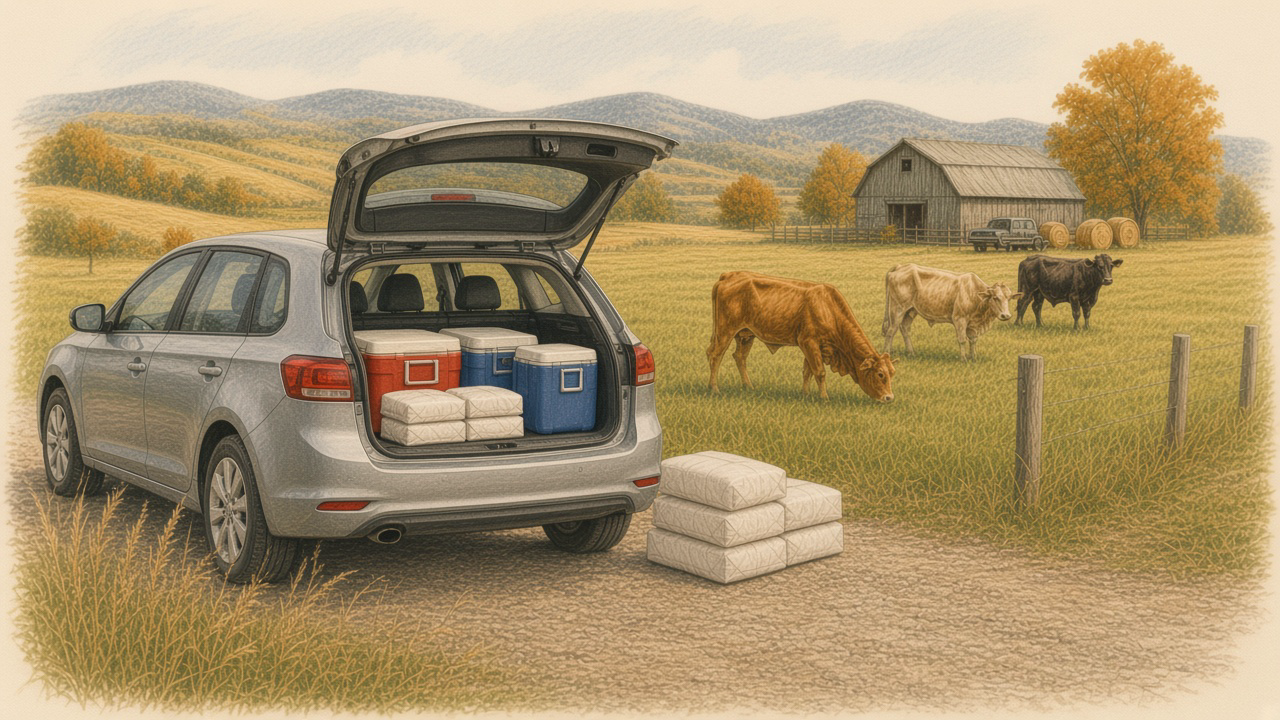
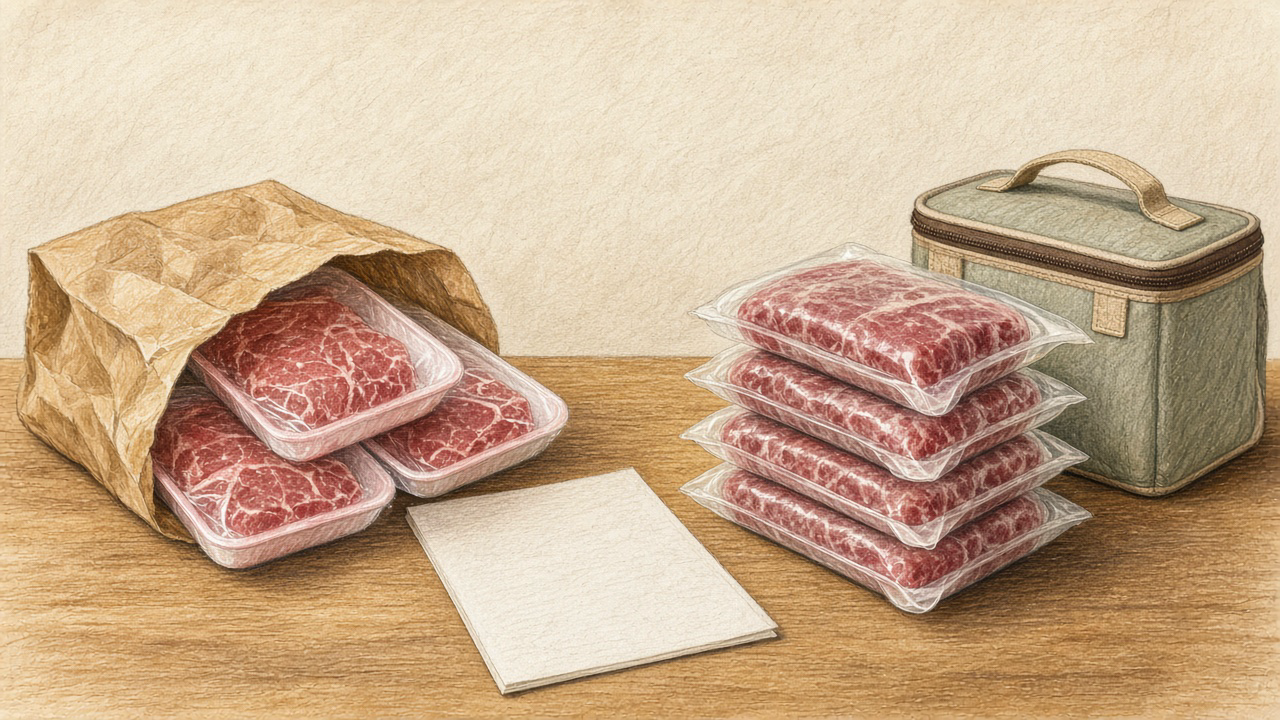
Pickup day is 100 to 125 lb of frozen beef and a 2-hour clock. How many coolers to bring, what to do the night before, and getting it into the freezer at 0°F.
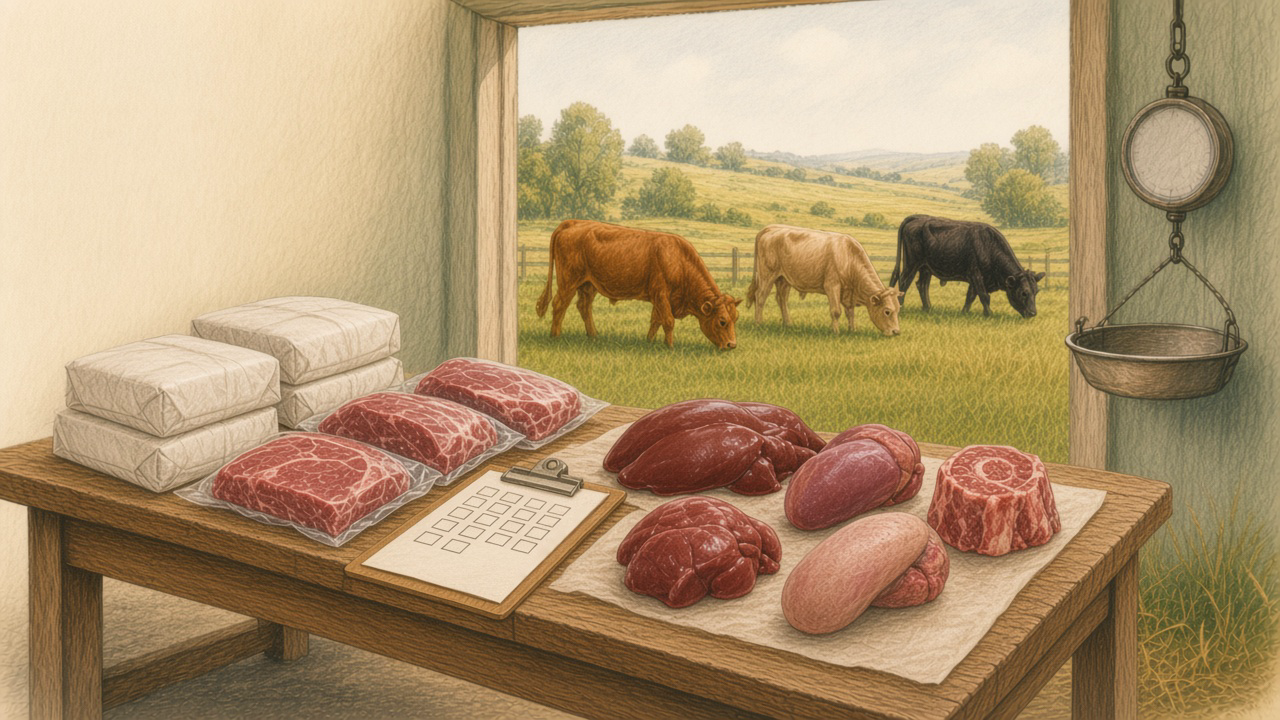
Only if you ask. One 1,400 lb steer has about 25 lb of liver, heart, tongue, and oxtail, so your quarter share is about 6 lb. How butchers split them and what it costs.
About $390 at 2026 USDA averages: $0.94 per hanging pound plus half a $125 kill fee. Four real butcher price lists and the add-ons that pad the bill.
Yes. A half cow is two mixed quarters. At 2026 USDA averages each family pays about $1,200 and takes home about 110 lb.
Front quarters run about $70 cheaper and yield about 8 more pounds of beef. Hind quarters hold the filet, strip, and T-bone. Ribeyes are up front.
Six months of Kroger beef at regular prices runs about $1,144 for 110 lb. A farm quarter is about $1,000. Sale shopping only ties.
Some farms need 3 weeks. Others are booked a year out. Real farm and butcher lead times, why fall fills by August, and your move if you are late.
Boneless can shrink a quarter cow box by about 18 lb. The edible meat is the same. Yield math, taste tests, and when bone-in is worth it.
Sam's Club rebuild of a 50 lb eighth lands ~$407 Choice / ~$430 grass-fed vs $749 shipped. Almost all of that gap is ground.
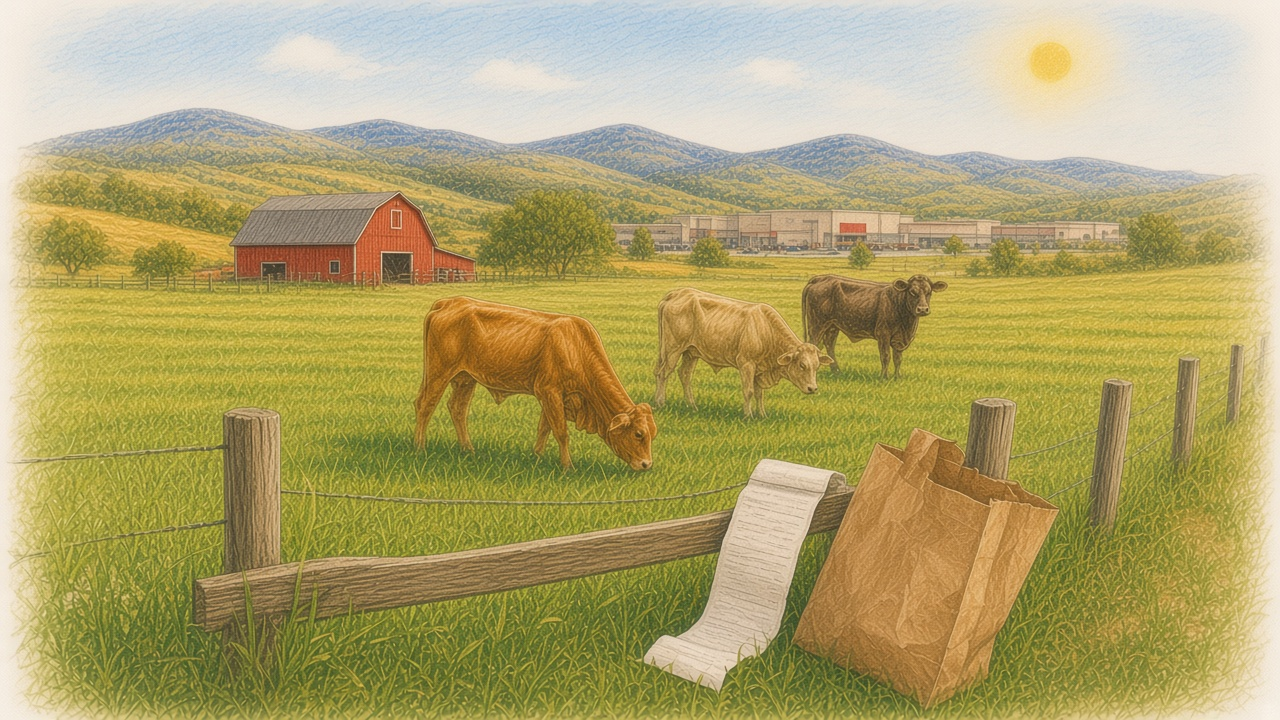
Walmart beats a $749 eighth cow on the receipt. Almost all of the gap is ground beef. On grass-fed steaks the farm box wins.
Costco ground can beat a farm quarter on $/lb. Costco ribeye does not. Here is the Oct 2026 basket math for ~110 lb of beef.
Yes. Fridge-thawed cow-share beef can go back in the freezer. USDA rules, quality tradeoffs, ground vs steaks, and what to do after a power outage.
Most farms ask $200 to $300 to hold a quarter cow. USDA's 2026 average is $262. What the deposit covers, when the rest is due, and why it rarely comes back.
Yes, but not by much. USDA's 2026 grass-fed report puts a whole cow at $11.90 per freezer pound vs $13.30 for a quarter. Here is when the savings are real.
Vacuum-sealed beef at 0°F stays safe indefinitely. For best taste, plan on about a year for steaks and roasts and 3 to 4 months for ground. Fridge times too.
A half cow (~200 to 250 lb) usually lasts a family of 4 about 6 to 12 months. Household pace math, freezer life, and when a half is too much beef.
An eighth is ~50 lb for $749 shipped. A quarter is ~100 to 125 lb for about $800 to $1,200 plus a freezer and a pickup. Here is who should buy which.
Farms quote $/lb hanging. Grocery is take-home. Convert hanging $/lb to freezer $/lb (~60–70% yield) so the cheap farm stays cheap.
Cut-and-wrap on a quarter cow usually runs about $130–$225 ($0.75–$1.25/lb hanging). Kill fee, vacuum seal, and all-in vs hanging-only quotes.
A quarter cow (~100–125 lb) is the classic fit for a family of 4. Couples often prefer an eighth (~50 lb). Bigger households may want a half.
A quarter cow (~100–125 lb) often lasts a family of 4 about 3–6 months of beef meals. Freezer life, cook-through pace, and when an eighth is smarter.
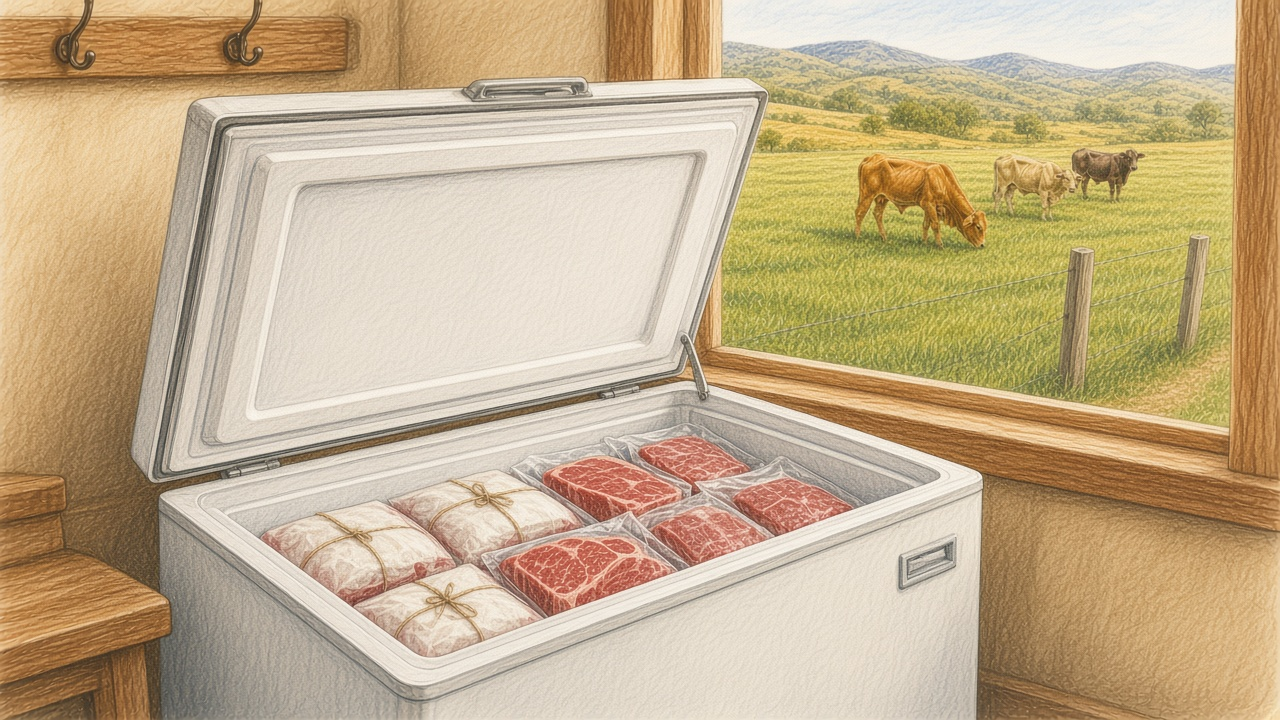
A quarter cow (~100–125 lb) usually wants a 5–7 cu ft chest freezer. Size bands, why buy one up, chest vs upright, and what to plug in before pickup.
A half cow (~200–250 lb) usually wants a 9–15 cu ft chest freezer. Size bands, why buy one up, chest vs upright, and what to plug in before pickup.
An eighth cow is ~50 lb for $749 shipped (~$15/lb). For a couple eating beef twice a week, that is about 5–6 months of meals. Here is how that stacks against a month of grocery beef.
A quarter cow usually yields about 3-6 top sirloin packages (roughly 6-12 steaks at 1"). Thickness, tip vs steaks, and how the cut sheet moves the count.
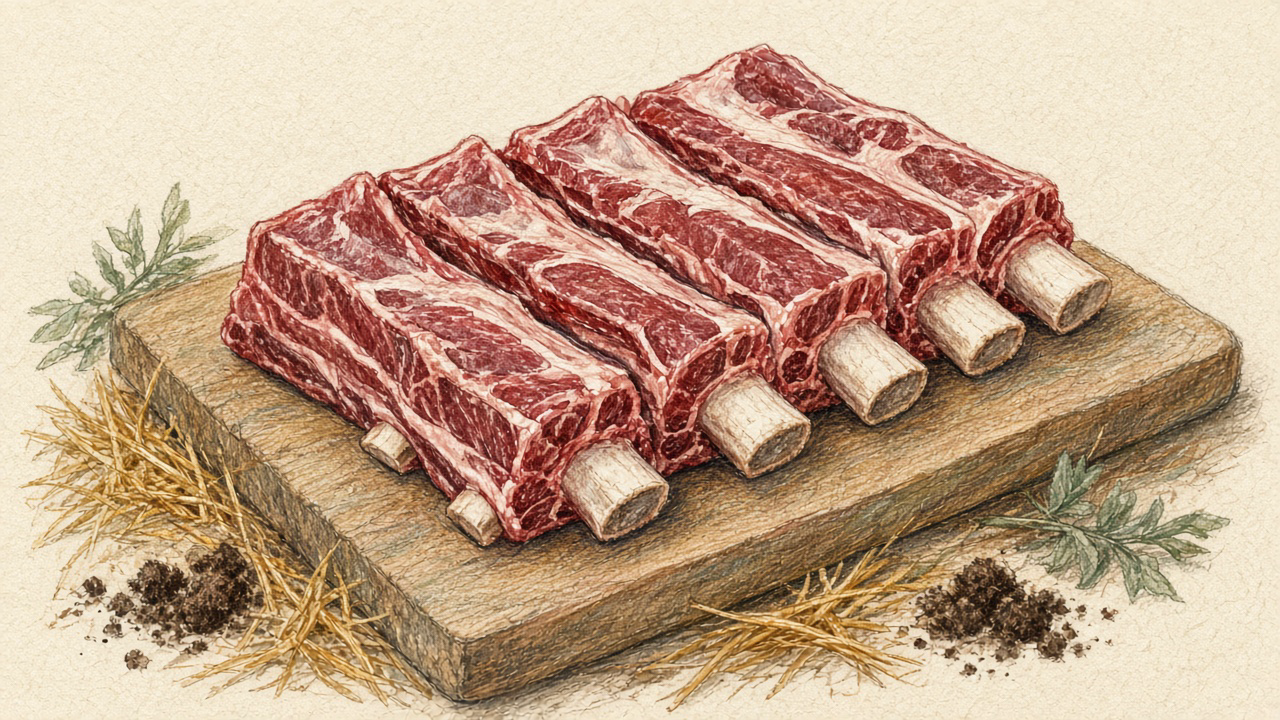
A quarter cow usually yields about 2-4 short rib packages (roughly 4-8 lb). Plate vs chuck, English vs flanken, and what happens if you grind them.
An eighth cow usually lands about 2-4 roast packages (~6-10 lb) in a fixed ~50 lb mix. Half a quarter's haul, no cut sheet, Sunday dinners included.
An eighth cow usually yields about 2-3 ribeye packages (roughly 4-6 steaks at 1 inch). Fixed mix, ~2.5-4 lb of ribeye, and how thickness still moves the count.
A quarter cow usually yields about 4-6 NY strip packages (8-12 steaks at 1"). Short loin math, thickness, and why T-bones compete for the same meat.
An eighth cow usually yields about 2-4 filet steaks from ~1-2 lb of tenderloin (about 1-2 packages). Fixed mix, scarce vs ribeyes, and how thickness still moves the count.
Most quarter cows land around $800–$1,200 for about 100–125 lb of beef. Here's what drives the price, the deposit, and when an eighth cow is smarter.
A quarter cow usually yields about 4-8 filet steaks from ~2-4 lb of tenderloin. Thickness, whole tenderloin vs steaks, and how that compares to ribeyes.
About 2–3 cubic feet for ~50 lb take-home. Fridge freezers often work. Appliance math, packing tips, and eighth vs quarter.
A half cow needs about 8–10 cubic feet of freezer space for 200–250 lb take-home. Not the fridge freezer. Chest vs upright, packing, and what to buy before pickup.
A whole cow needs about 15–20 cubic feet of freezer space for 400–500 lb take-home. Large chest or two freezers, packing density, and why a lot of people split it.
About 24 lb of ground in a typical ~50 lb eighth — roughly half the box. Package math, eighth vs quarter, and why the burger pile is the feature.
About 14 lb of steak meat in a typical eighth (~50 lb) lands about 8–14 packages depending on thickness. Fixed mix versus a cut-sheet quarter cow share.
Yes if your quarter includes the front chest (or a mixed split). Hind-only? No brisket. Keep it whole, split, or grind it — ask before you pay a deposit.
A quarter cow usually lands 4–10 roast packages — typically 6–8, or ~12–20 lb if you keep chuck and round as roasts. Here's how the cut sheet moves it.
A quarter cow needs about 5–7 cubic feet of freezer space for 100–125 lb take-home. Chest vs upright, pack size, and what actually fits before pickup day.
A quarter cow usually lands about 70–80 lb of ground beef — most of the box. Here's the package math, how the cut sheet moves it, and whether that's a problem.
A quarter cow usually yields about 4–6 ribeye packages (8–12 steaks at 1"). Here's the rib primal math, thickness tradeoffs, and bone-in vs boneless.
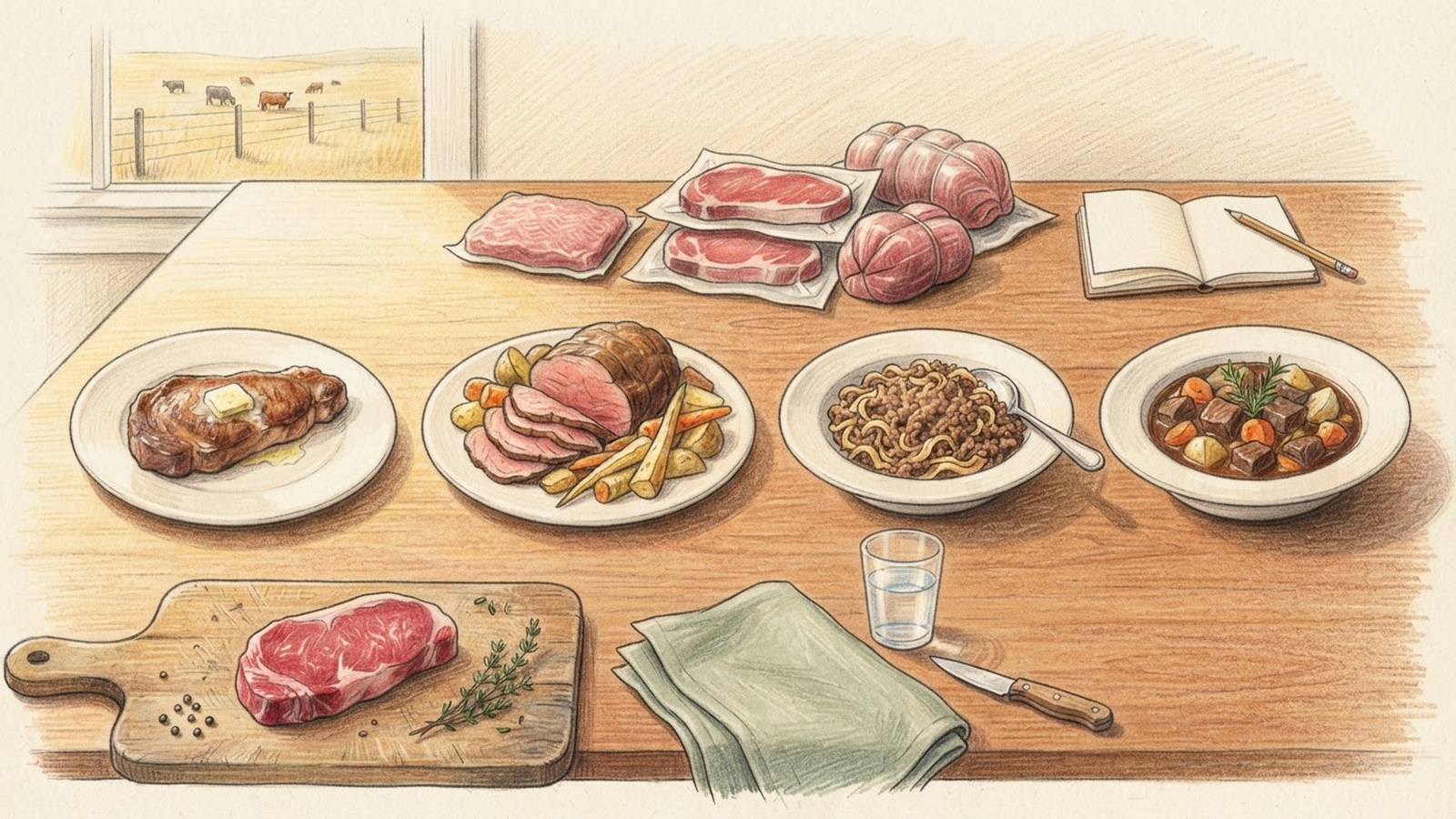
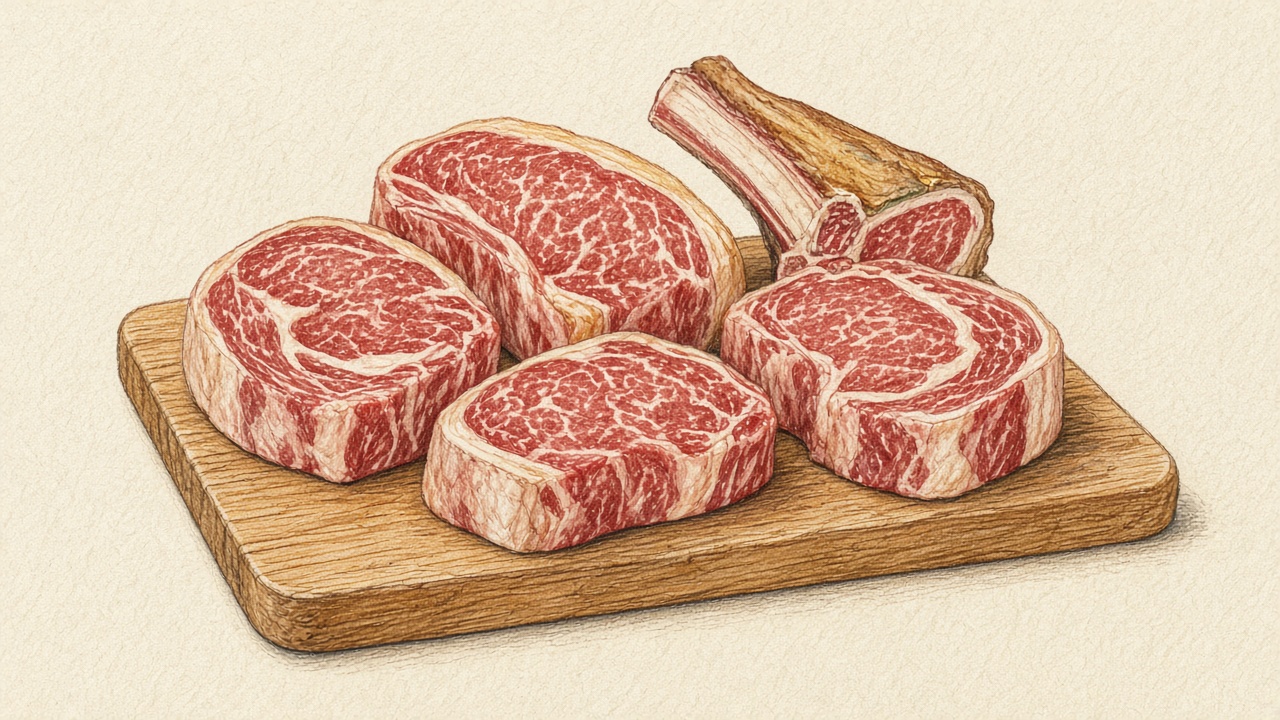
A quarter cow usually lands about 15–25 steaks. Here's the cut-by-cut count, why thickness changes everything, and how your cut sheet steers the number.
The number on your beef quote isn't what's in the freezer. Live vs hanging vs take-home, with a quarter-cow example.
Real Whole Foods screenshots vs a ~$2,200 half cow — cut-by-cut gaps, a 30–40% ground basket, and why “suppliers may vary” costs more.
How to evaluate Pennsylvania beef farms and what to look for in a share program.
Benefits of bulk beef — cost, quality, and supporting independent farms.
Yield, cost per pound, and freezer needs for half vs whole shares.
A whole cow is about 400–500 lbs of take-home meat. Cuts, freezer space, and what you're actually stacking — not hanging weight.
Freezer layout, labeling, and long-term storage for quarter and half shares.
Signup through pickup — timeline, deposits, cut sheets, and butcher day.
A half cow is about 200–250 lbs of take-home meat. Cuts, freezer space, and what a family actually gets — not the hanging-weight quote.
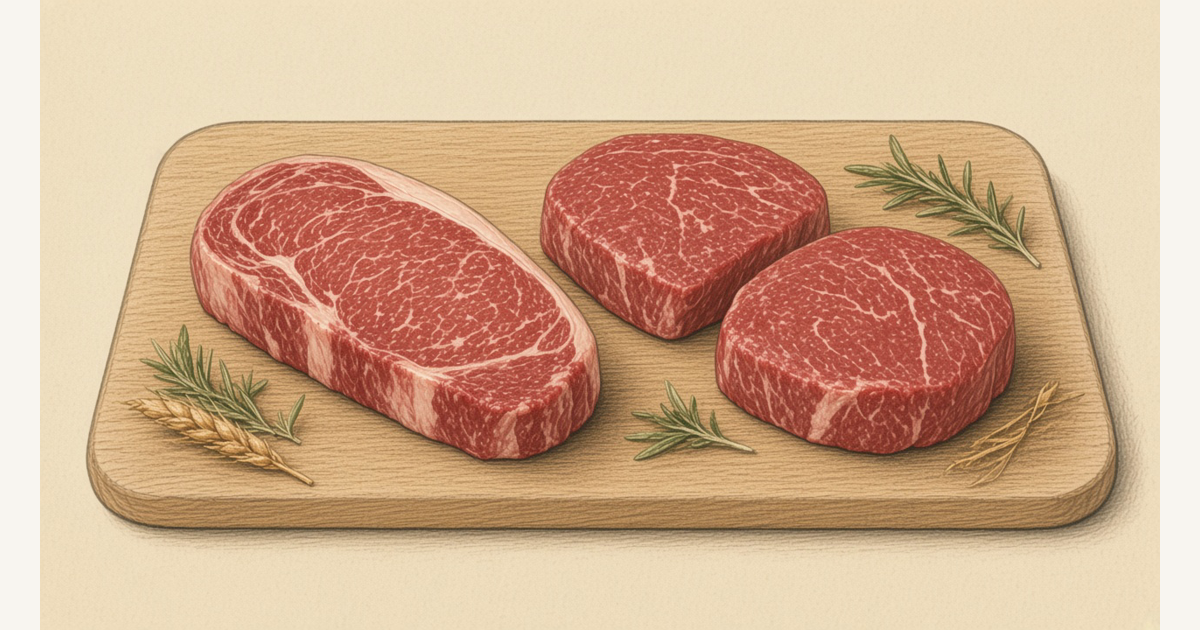
Steak thickness, roasts, ground beef options, and specialty cuts on your cut sheet.
What drives share pricing, deposits, and how to compare value across farms.
Nutrition, taste, and environmental considerations when choosing how your beef was raised.
Freezer space, organization, and temperature tips for storing a whole cow.
Compare quarter vs half shares — yield, cost, freezer space, and household fit.
Cut-by-cut weights and what to expect from a quarter cow — ideal for first-time share buyers.
Everything you need to know about buying a quarter cow — what's included, yield, storage, and why it fits small families.
Currently out of stock. Starter ~50 lb grass-fed share — cut mix, $749 all-in with shipping.
Currently out of stock. ~50 lbs of 100% grass-fed beef for $749 shipped — steaks, roasts, and ground.
What a quarter cow includes, typical yield, and how to reserve a share from a local farm.
Half-cow basics for families — yield, freezer space, and how Field & Cattle helps you match with farms.
Whole-cow overview for larger households — volume, cost drivers, and working with your butcher.